- ✓Soft-ripened = bloomy white rind + high moisture + ripening that moves from rind to centre.
- ✓Penicillium candidum and often Geotrichum candidum drive rind development and deacidification.
- ✓They have a narrow peak eating window — hours to days, not weeks.
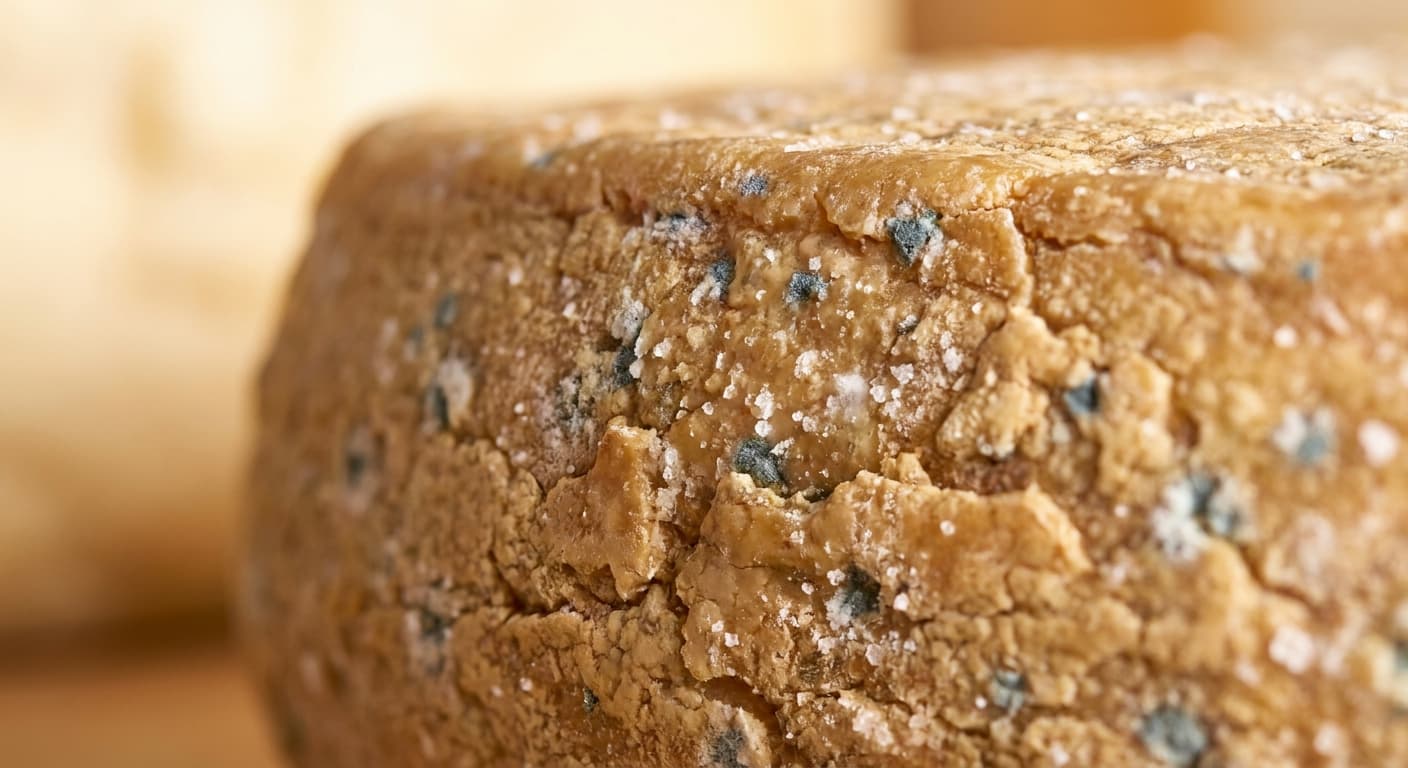
The defining technique: high moisture, gentle handling
Soft-ripened cheeses start with a relatively acidic, lactic-style set — more time for starter bacteria to work, less rennet. The curd is cut gently or even just ladled, preserving moisture. Finished wheels are small, often 200 g to 1 kg, so that ripening can move through them in a few weeks. They're typically surface-sprayed or inoculated with Penicillium candidum, then aged cool and humid to let the white bloom develop.
How the rind works
For about the first four or five days, yeasts — particularly Geotrichum candidum and Debaryomyces hansenii — colonise the surface and consume lactic acid, raising the rind's pH. Once the surface reaches about pH 5.8, P. candidum can grow, and the characteristic white bloom develops over the next week or two. As the mould and associated enzymes work, proteolysis on the rind breaks down the protein matrix, and the texture beneath the rind softens and flows. That's why a Brie ripens inward.
If your bloomy rind won't develop, check surface pH first. P. candidum won't grow below about 5.5 — too-acidic cheese simply stays bare.
Industrial Brie vs traditional Camembert
Industrially produced Brie is typically a stabilised type: higher pH, more calcium in the matrix, less aggressive ripening. It's consistent, shelf-stable, and slightly bland. Traditional Camembert de Normandie AOP is made from raw milk with a more acidic set, runs more aggressively, and tastes of mushrooms, cauliflower, and earth. They share a silhouette but they're cousins at best.
Common faults in soft-ripened cheesemaking
- Slippery skin: too-aggressive yeast succession, usually from too-warm or too-humid aging. Lower temperature.
- Ammonia smell: over-ripe; proteolysis has gone past pleasant. Eat sooner next time.
- No bloom: surface pH too low, or P. candidum applied too early, or too much brine on the rind.
- Toad-skin wrinkles: Geotrichum outgrowing Penicillium. Adjust culture ratios.
- Bitter taste: unbalanced proteolysis. Often rennet quality, sometimes milk issues.
Peak ripeness
A soft-ripened cheese at peak is soft edge to edge, has a rind that's fully bloomed but not slimy, smells of damp forest floor and warm milk, and gives slightly when pressed. Peak lasts for a handful of days at best. Under-ripe is chalky in the middle; over-ripe is runny and smells ammoniac. Part of selling soft-ripened cheese well is helping customers understand when to eat it.
Frequently asked
Can I eat the rind?+
Yes. The rind on Brie, Camembert, and similar cheeses is edible and carries a lot of the flavour. It's not everyone's preference, but there's nothing food-safety-wise wrong with it.
Why does my home-made Camembert smell of ammonia?+
Over-ripe. Deamination of amino acids in the rind produces ammonia late in ripening. Store colder and eat sooner; a small wheel is usually peak around week three to four.