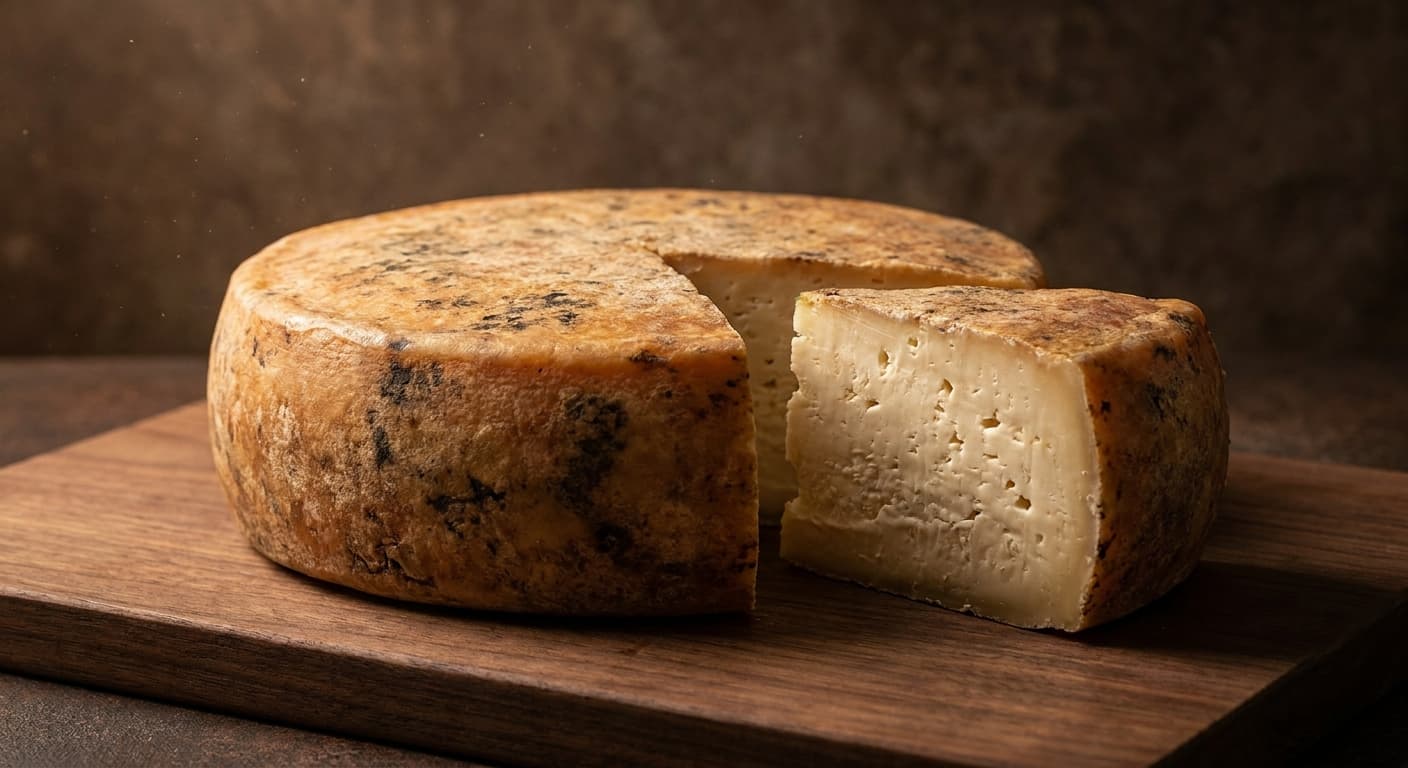
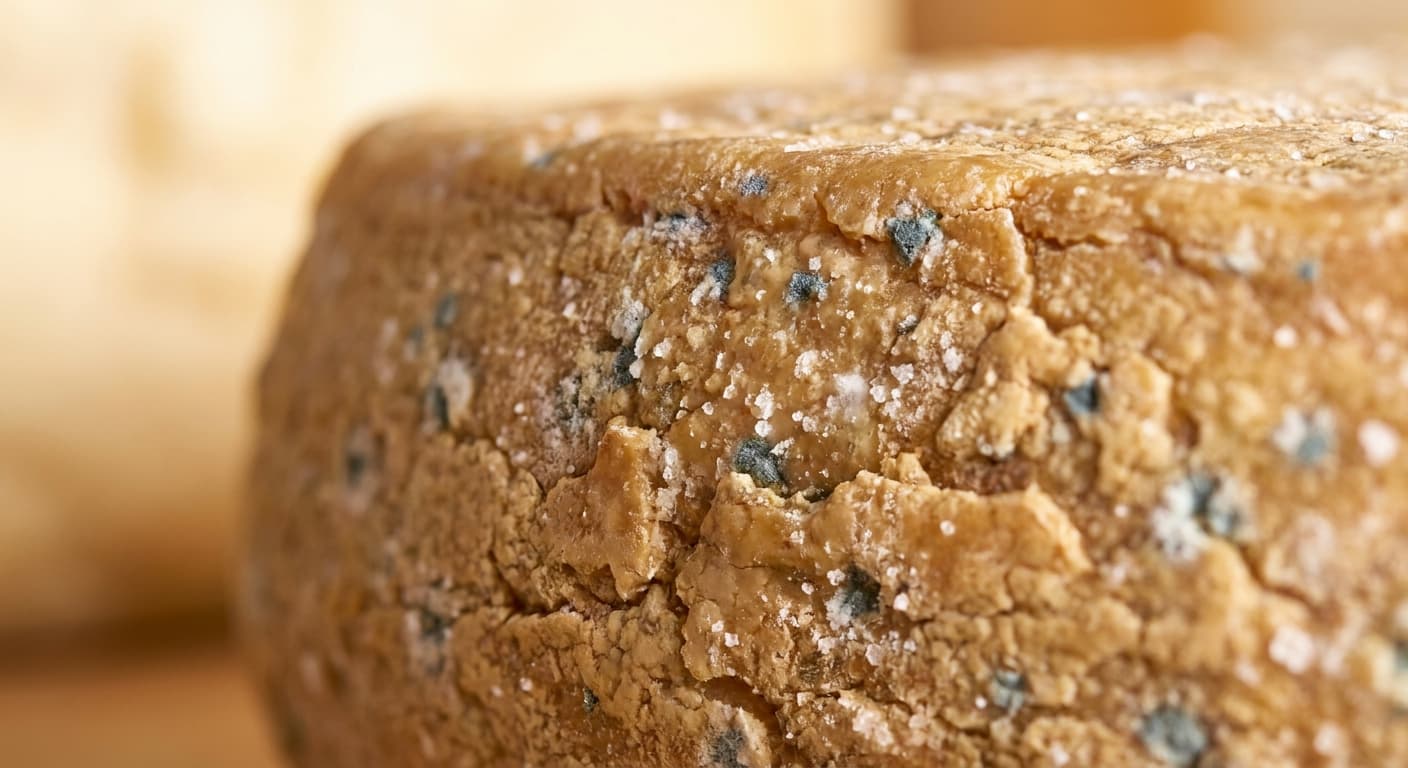
- ✓Penicillium roqueforti grows only where there's enough air inside the cheese.
- ✓Blues are either needle-pierced during aging (Stilton, Gorgonzola) or made from loosely packed curd (Roquefort).
- ✓The sharp piquant flavour comes largely from lipolysis — P. roqueforti's powerful lipases.
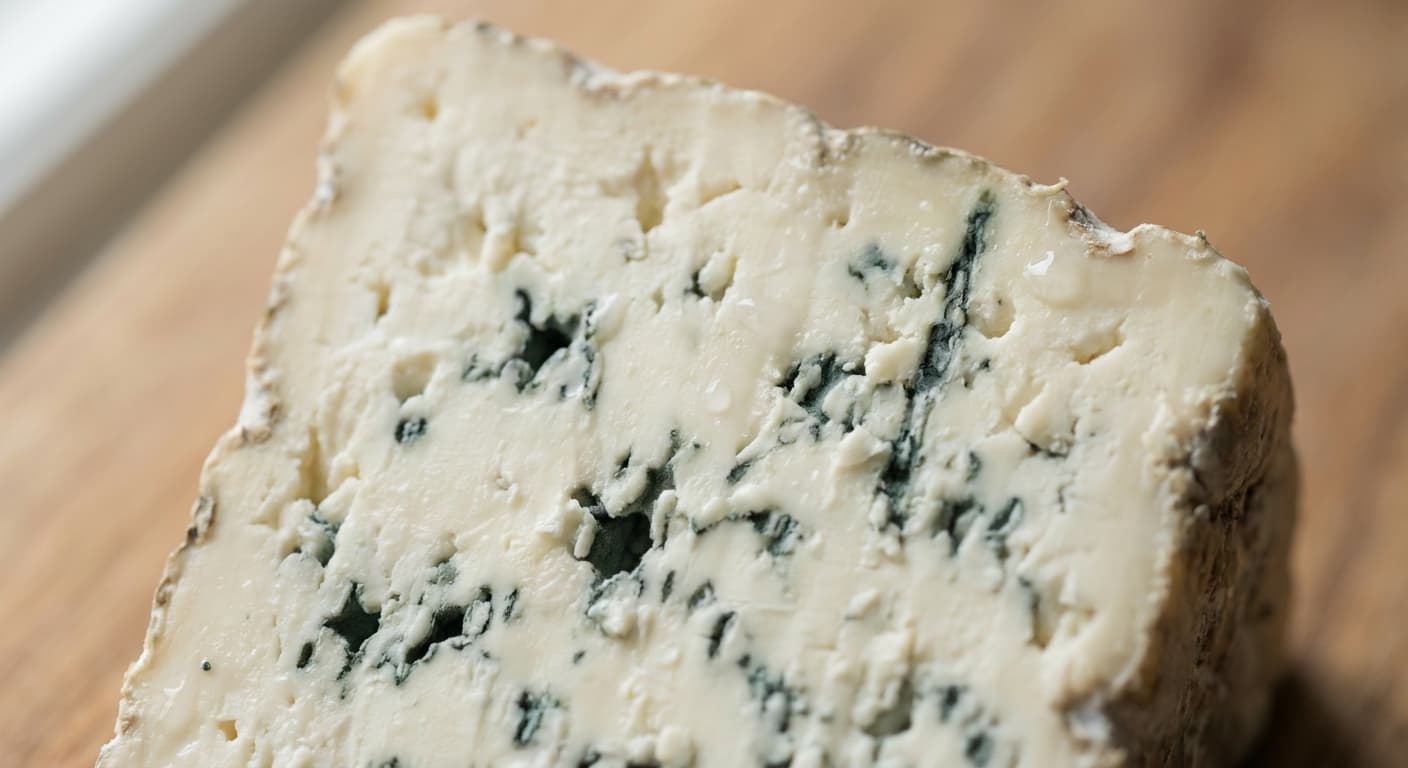
Why blue cheese needs air
P. roqueforti is a mould, not a bacterium, and moulds need oxygen. In a dense-pressed cheese the mould can only grow on the surface; to get it growing inside, you need internal air. Two techniques achieve this. The first is loosely packing the curd into the mould without pressing, so interior gaps remain — this is the Roquefort approach. The second is pressing normally and then piercing the aged wheel with long needles to create air channels — the Stilton and Gorgonzola approach.
The major blue families
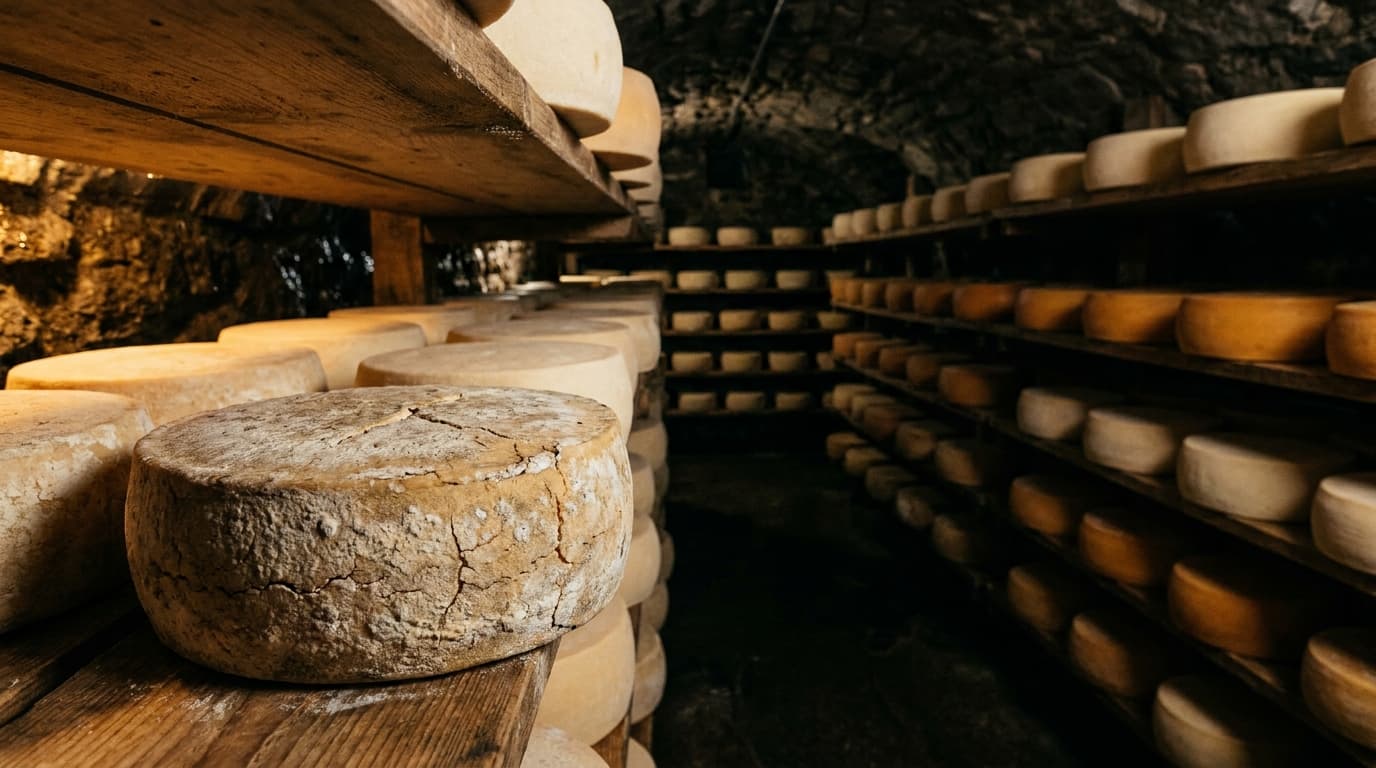
- Roquefort (France) — sheep's milk, loose-packed, aged in the natural caves of Combalou. Salty, sharp, creamy.
- Stilton (England) — cow's milk, needle-pierced, tall cylinder. Richer, more buttery than Roquefort.
- Gorgonzola (Italy) — cow's milk; 'dolce' is softer and milder, 'piccante' firmer and sharper.
- Fourme d'Ambert (France) — cow's milk, milder, smoother, one of the most approachable blues.
- Cabrales (Spain) — often from mixed milks, aged in mountain caves, powerfully aromatic.
- Bayley Hazen Blue, Rogue River Blue (US) — modern American artisans working in the same family.
The flavour engineering of a blue
P. roqueforti does two things at once. Its proteases break proteins down to the peptides that give any aged cheese its depth. Far more distinctively, its lipases cleave milk fat into short-chain fatty acids — caproic, caprylic, capric — which are the source of the piquant, almost peppery sharpness unique to blue cheese. The methyl ketones formed from these fatty acids give blues their characteristic 'blue' aroma, chemically distinct from any other cheese family.
Making a blue at home
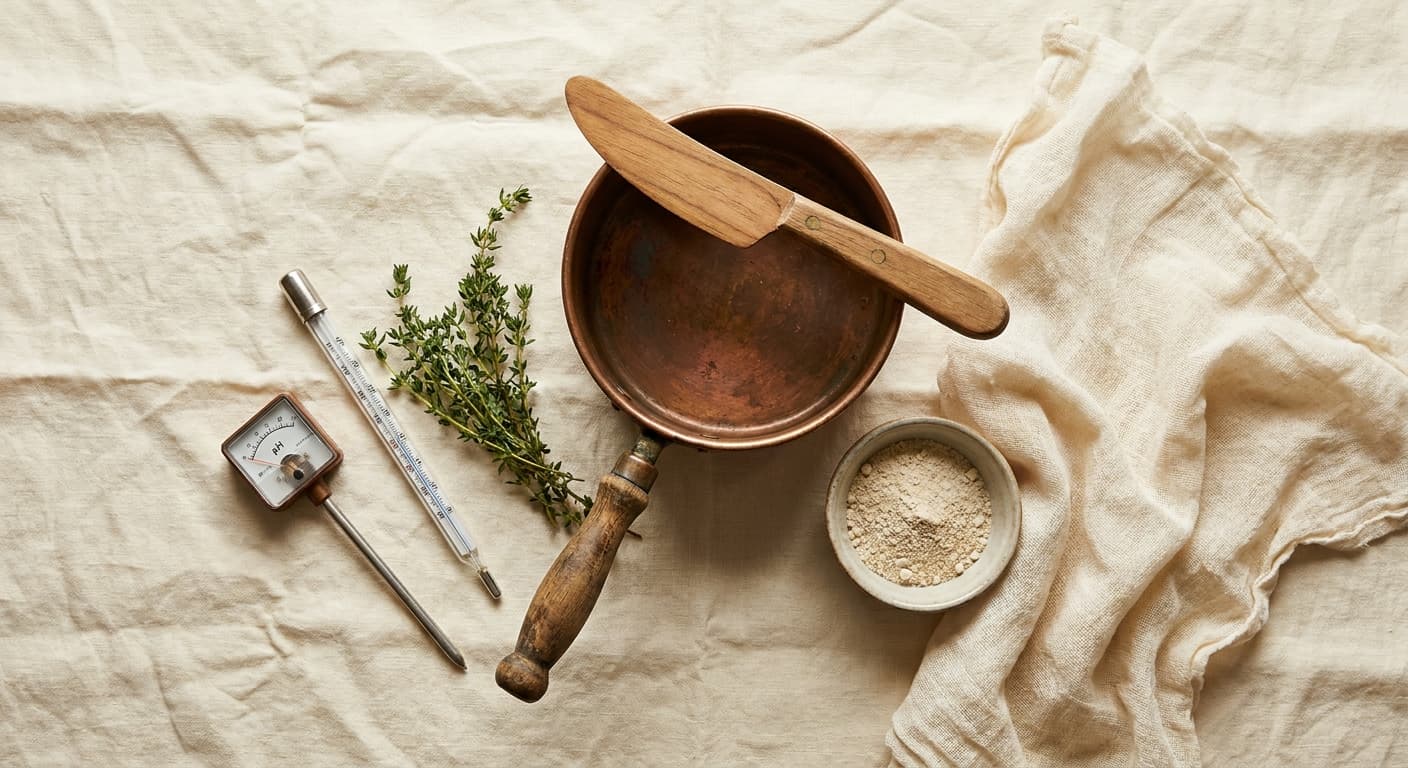
Blues are more forgiving than they look, and a young blue in six weeks is very achievable. Use P. roqueforti powder in the milk during the make. Cut and drain to preserve moisture; salt generously (4%+ is typical). Pierce the wheel at two weeks with a sterilised knitting needle, making dozens of clean holes through the whole wheel. Age at 10–12°C with 90%+ humidity. Wrap in foil after about four to six weeks to slow rind drying and let the mould continue working through the veins.
Serving and pairing blues
Blues shine with contrast. Sweet pairings — pear, fig, honey, port wine, Sauternes — offset the salt and piquancy. They also do remarkably well with walnuts, dark chocolate, and brioche. Save strong reds for harder cheeses; most blues are overwhelmed by tannin. Serve cool, not cold — around 14°C — and let them sit out for 45 minutes before the meal.
Frequently asked
Is blue cheese safe? The mould is a concern.+
P. roqueforti doesn't produce significant mycotoxins under cheese aging conditions; it's one of the most well-characterised food-grade moulds. The other moulds that can appear on a blue (fuzzy greys, pinks, blacks) are spoilage and should be trimmed off.
Why does my blue cheese only have veins near the piercings?+
That's normal for the first few weeks, but the veins should spread into the paste over one to two months. If they don't, the internal structure is too dense for air to diffuse. Look at curd-handling — don't press as hard next time.