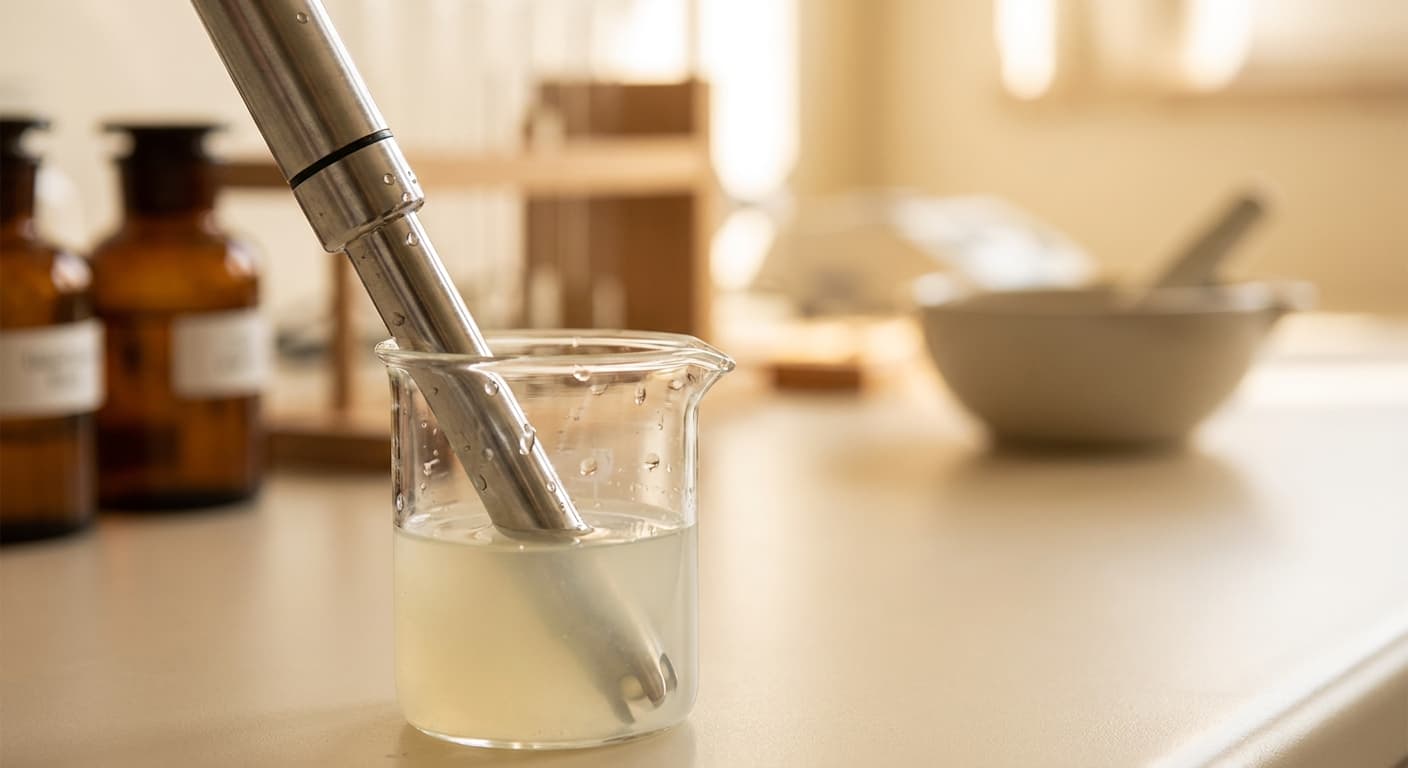
- ✓Proteolysis breaks proteins down into peptides and amino acids; it's the biggest driver of aged flavour.
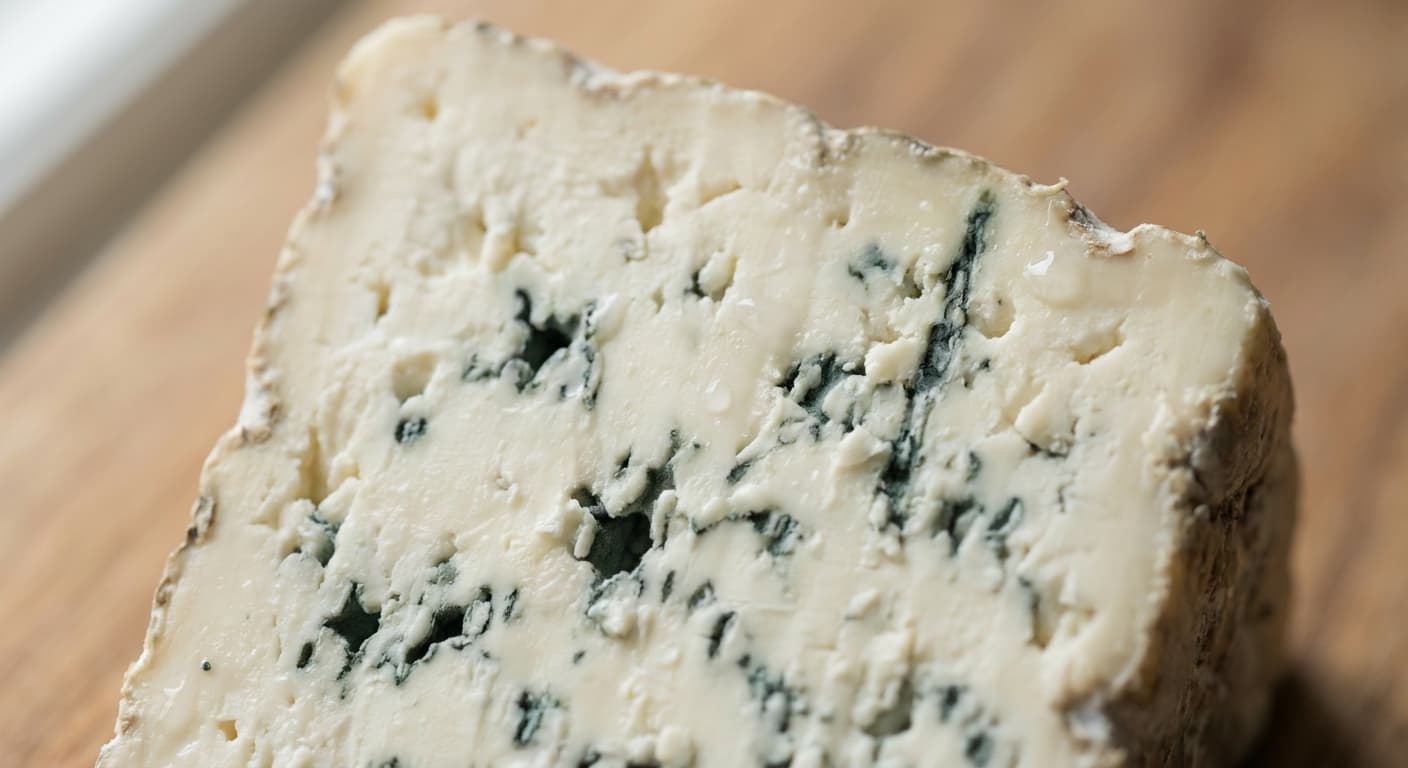
- ✓Lipolysis releases free fatty acids; it's essential in blues and piquant cheeses, minor in others.
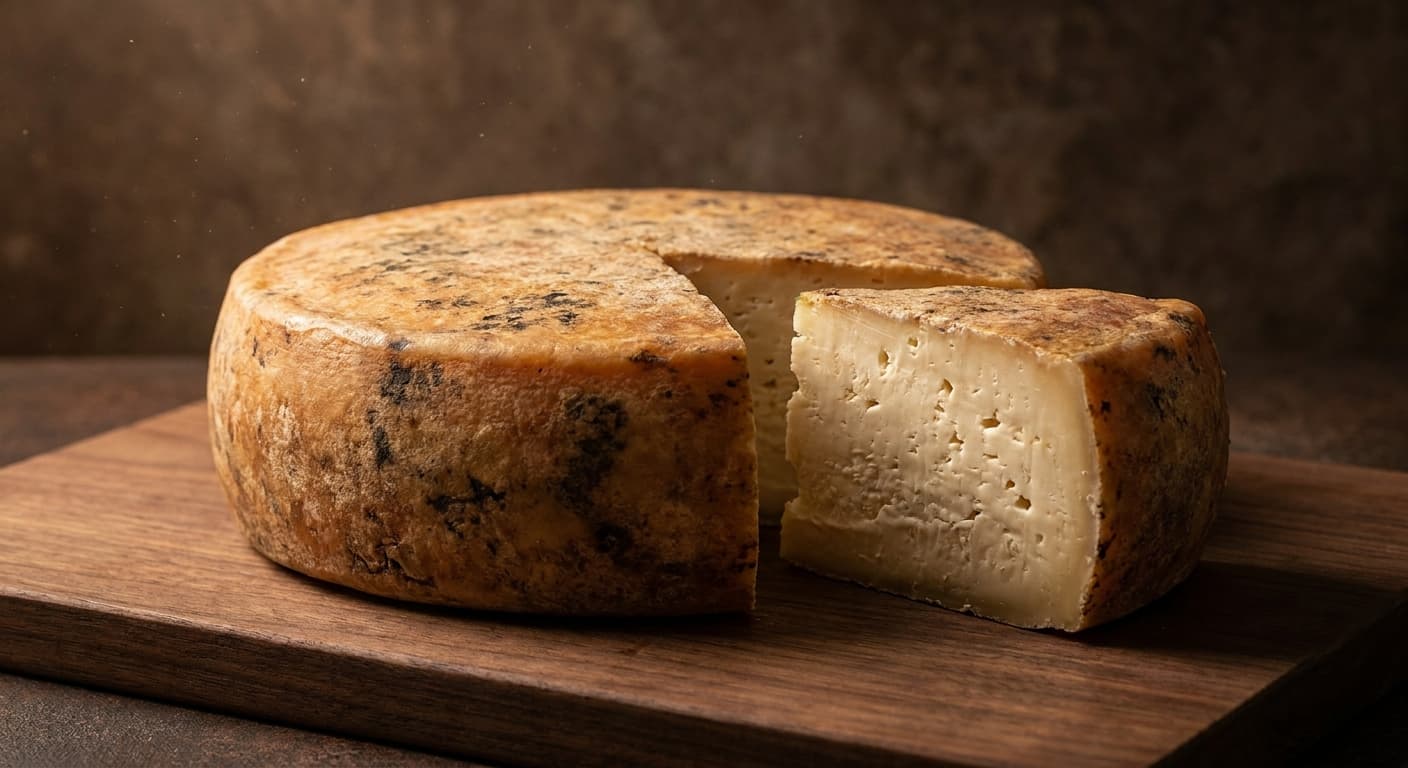
- ✓Glycolysis cleans up residual lactose and citrate; it's what makes the holes in Emmental.
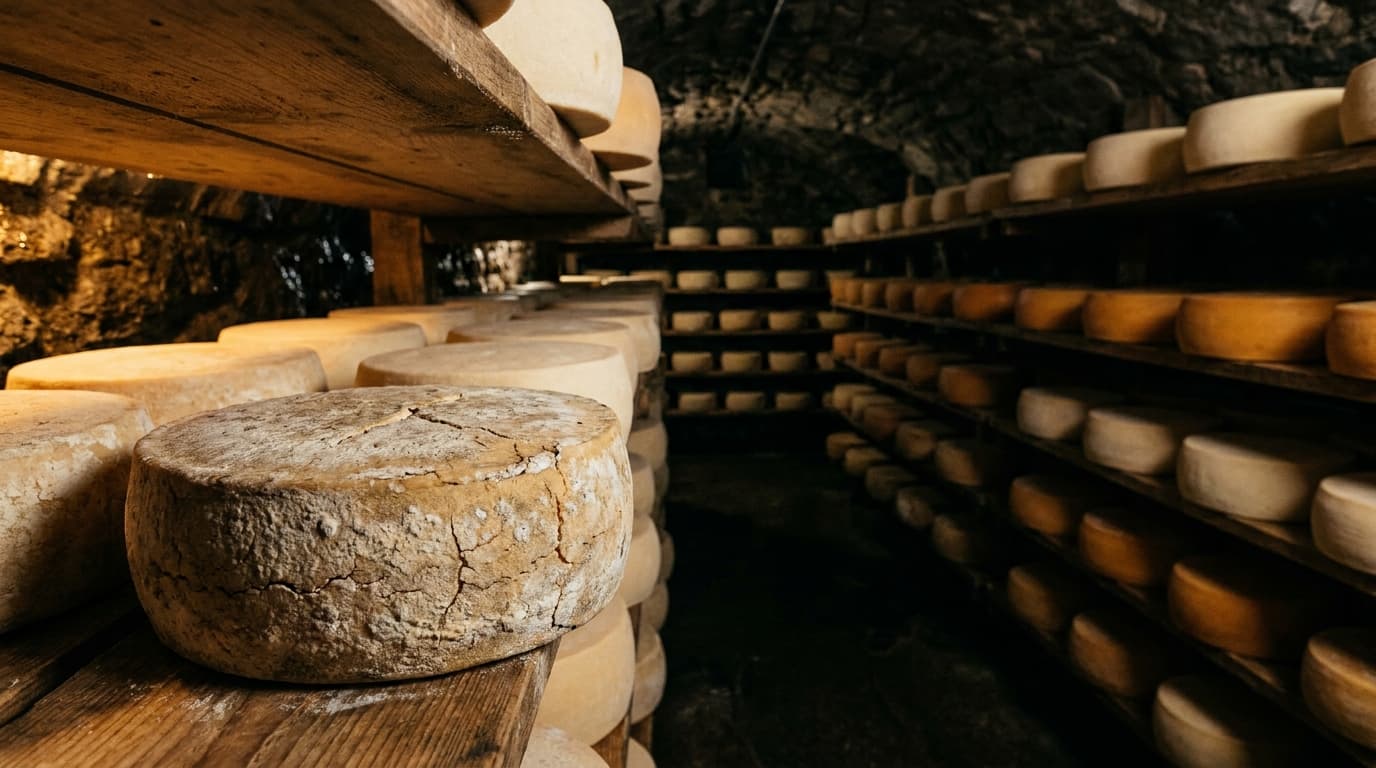
Three parallel processes, one wheel of cheese
Ripening isn't one process; it's at least three, running in parallel, at rates set by temperature, humidity, and the resident microbes. Proteolysis works on proteins, lipolysis on fats, and glycolysis on residual sugars. Each produces its own set of flavour compounds, and the balance of the three — alongside the specific microbes driving them — is what distinguishes a Stilton from a Manchego from an Époisses.
Proteolysis: the long dismantling
Proteolysis happens in two phases. Primary proteolysis, driven by residual rennet and plasmin (a native milk enzyme), breaks long casein chains into medium-sized peptides. This softens texture and is largely flavour-neutral. Secondary proteolysis, driven by microbial enzymes, breaks those peptides down further — into small peptides that carry bitterness, umami, and savoury notes, and finally into free amino acids that are the precursors of virtually every aged-cheese flavour compound.
Bitterness in aged cheese is almost always a proteolysis imbalance — too many bitter peptides, not enough enzymes to break them down the rest of the way. It's a solvable problem, not a sign of bad milk.
Lipolysis: small in most cheeses, huge in some
Milk fat is mostly triglycerides — glycerol backbones with three fatty acids attached. Lipase enzymes (native to milk, some from starters, more from moulds and rind microbes) release those fatty acids, particularly short-chain ones like butyric, caproic, and caprylic acid. In a Parmigiano, lipolysis is modest and adds depth. In a Roquefort, it's aggressive — Penicillium roqueforti produces potent lipases, and the resulting free fatty acids are the piquant, peppery note you taste.
Glycolysis: the end of the lactose story
Most lactose is metabolised by starters during the make, but some residual sugar always remains. That sugar is fermented during aging — sometimes by the starters themselves, sometimes by secondary microbes like Propionibacterium, which converts lactic acid to propionic and acetic acids plus CO₂. That CO₂ is what forms the eyes in Swiss-style cheeses, and propionic acid contributes to their characteristic nutty sweetness.
The affineur's job: managing rate
Every enzymatic rate has a temperature coefficient — typically doubling for every 10°C increase. An affineur maturing at 12°C is running ripening at roughly half the rate of one at 22°C, buying time for flavours to develop slowly and cleanly. Humidity controls rind drying and therefore surface microbial activity. Turning, brushing, washing, and occasional piercing all adjust local conditions across the wheel. The goal is uniform, even ripening from rind to centre.
What 'over-ripe' actually means
A cheese is over-ripe when proteolysis has gone past the point of pleasure — the protein matrix is so fragmented it can't hold structure, bitter peptides accumulate faster than they can be broken down, or ammonia from amino acid deamination becomes unpleasantly dominant. Different cheeses tolerate different degrees of this. A Brie is at peak for a narrow two-week window; a mature Cheddar improves over years; a Mimolette is still excellent at three.
Frequently asked
Can I speed up aging by raising the temperature?+
Yes, and it's a terrible idea. Higher temperatures accelerate the wrong enzymes faster than the right ones, and often encourage unwanted microbes. Aged flavour is built by patient, controlled ripening — there's no shortcut.
Why do some cheeses develop crystals?+
Those are usually tyrosine crystals from proteolysis, or calcium lactate crystals from glycolysis. They're signs of a well-aged, well-made cheese, not defects.