- ✓Hard cheeses are defined by aggressive curd cooking and low finished moisture (30–38%).
- ✓The lower water activity makes very long aging possible — two years and beyond.
- ✓Texture evolves from firm and elastic when young to crystalline and crumbly when mature.
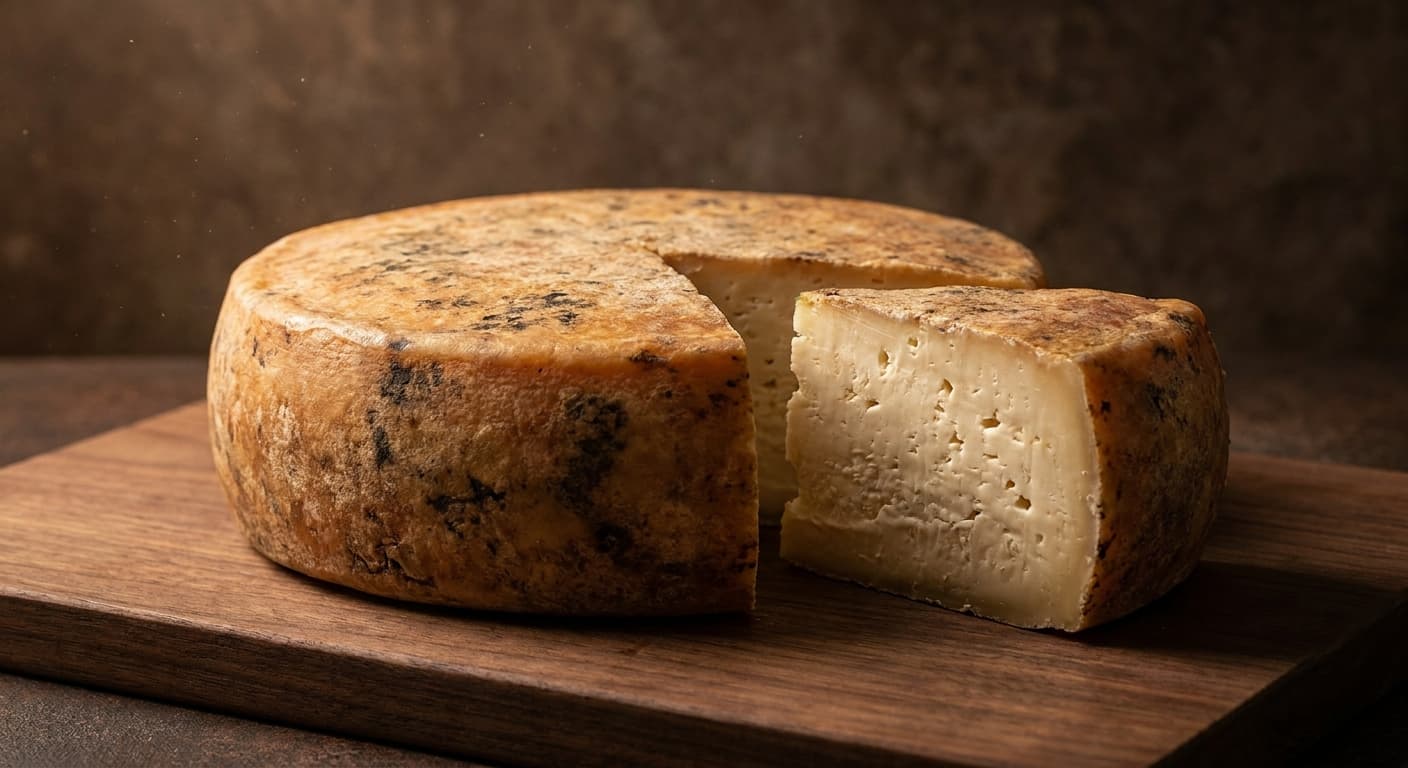
What technically makes a cheese 'hard'
A hard cheese is one where moisture has been reduced enough — typically below 38% — that water activity falls into a range where ripening is slow, stable, and can continue for years. The technique that gets you there is cooking the curd: heating the cut curd above 45°C (sometimes to 55°C) while stirring, which tightens the protein matrix and expels whey. The result is a firm, dry curd that can be pressed into dense, durable wheels.
The three great hard-cheese traditions
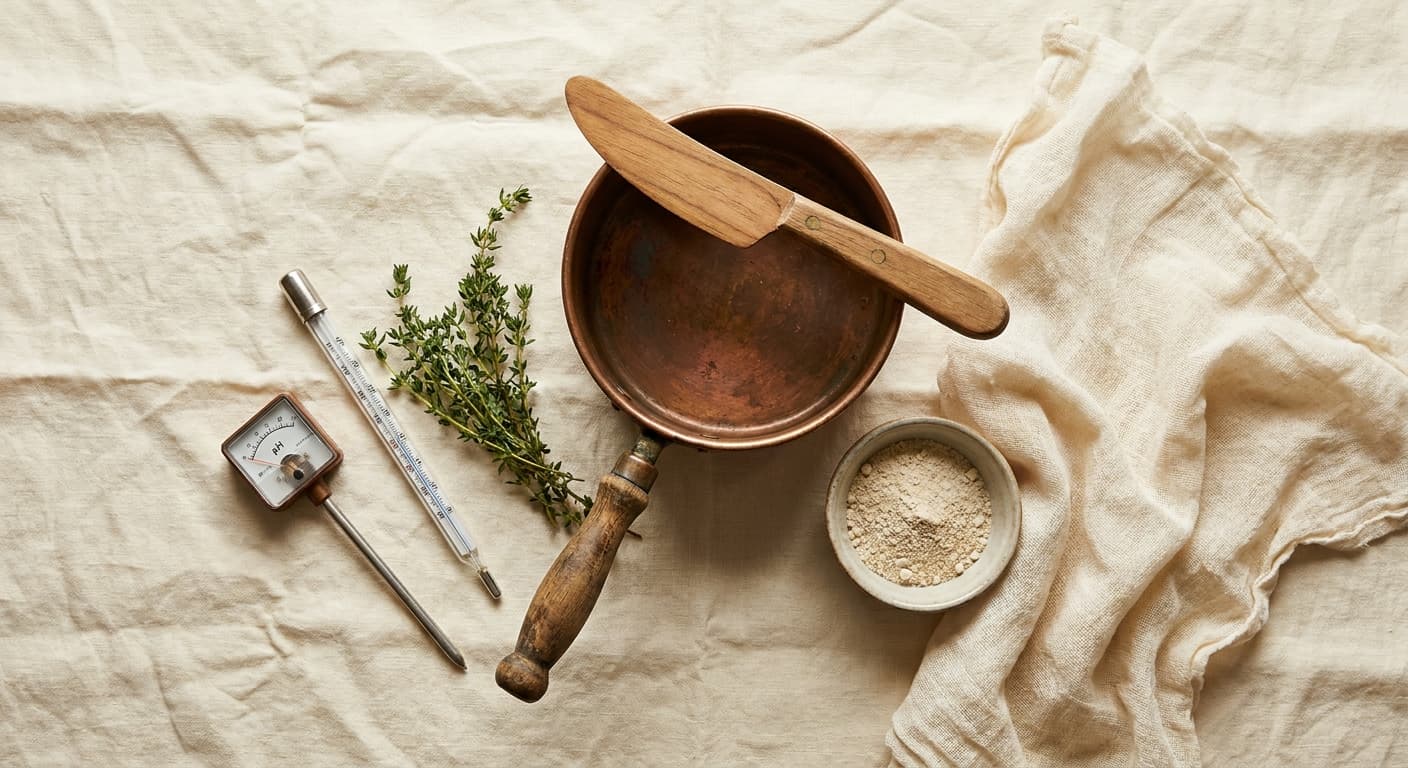
The Italian grana tradition — Parmigiano-Reggiano, Grana Padano — uses thermophilic cultures, very small curd, and copper vats; wheels can age three years or more and develop characteristic tyrosine crystals. The Alpine tradition — Gruyère, Comté, Emmental — uses slightly lower cook temperatures, larger wheels, and a range of secondary cultures including Propionibacterium for eye formation. The English tradition — Cheddar, Lancashire, Cheshire — centres on the cheddaring step, with matting and milling of the curd to build its unique texture.
How hard cheeses age
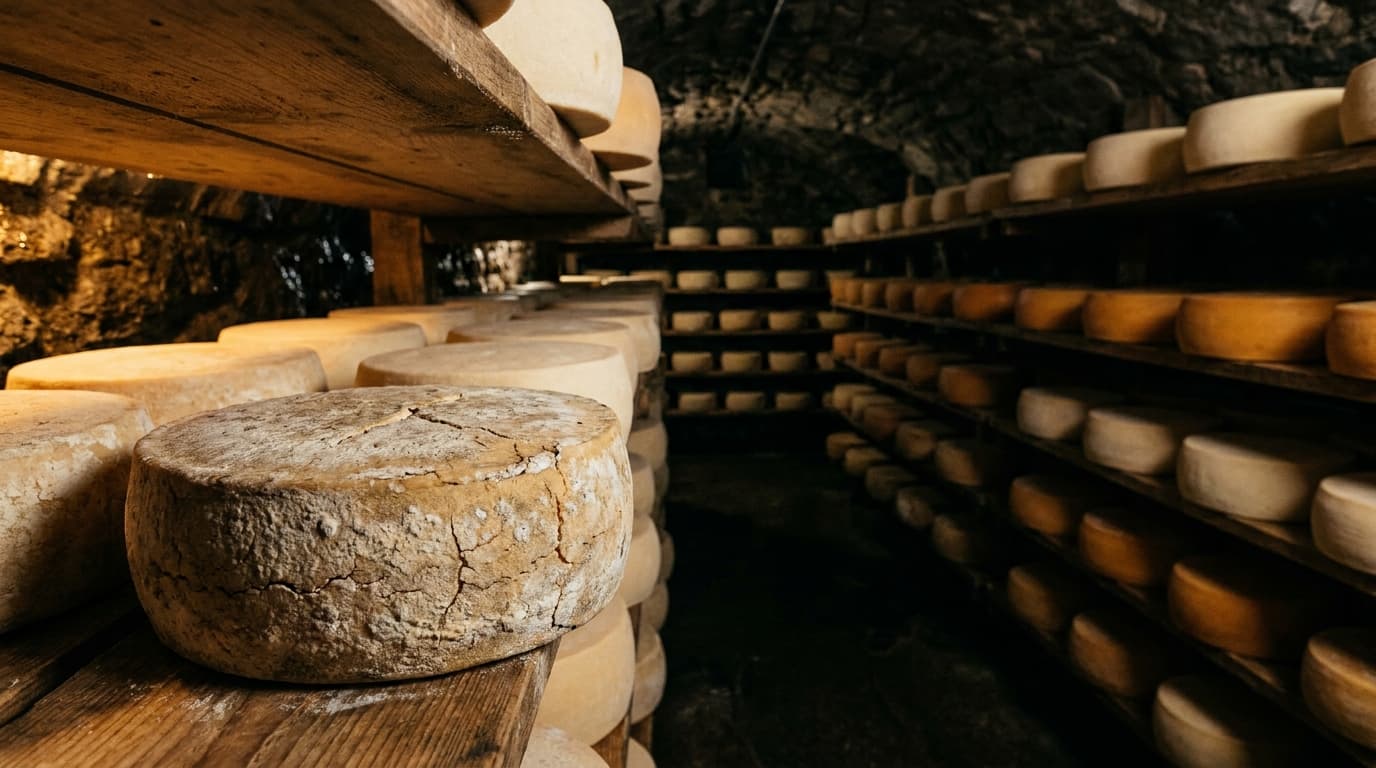
With low water activity, lactic bacteria can't keep metabolising, and unwanted spoilage organisms struggle too. What keeps working are enzymes: residual rennet, plasmin, and enzymes released as the starter bacteria die and autolyse. These enzymes slowly, patiently, break proteins down into flavour compounds over months and years. Temperature and humidity are tightly controlled — typically 12–14°C and 85% relative humidity — and wheels are turned regularly to keep shape and moisture even.
Making a hard cheese at home or in a small dairy
- Use thermophilic starter — essential for the cook temperatures required.
- Cut curd small — rice to pea-sized for grana-style, bean-sized for Gruyère-style.
- Cook slowly and stir continuously; rushing the temperature rise gives uneven moisture.
- Press heavily and progressively — start light, increase over hours.
- Brine-salt rather than dry-salting for the classic styles; it gives more even salt distribution.
- Age cool, for at least six months; most reward much longer.
Tasting hard cheeses properly
Warm a hard cheese at room temperature for at least an hour before serving — cold suppresses aromatic compounds. Cut thin slices that expose the interior rather than cubes, which trap flavours inside. Pair with something that doesn't dominate: hard cheeses are intensely flavoured, and a heavy red wine or sharp pickle can overwhelm them. A sliver of honey, a walnut, or a glass of light white wine usually works better.
Frequently asked
How long can I actually age a hard cheese at home?+
A well-made small wheel of tomme or farmhouse Cheddar can age six to twelve months in a mini wine fridge or cool cellar. Grana-style cheeses over 6 kg can age years, but they need more consistent conditions than most home setups provide.
Why does my home-aged hard cheese keep cracking?+
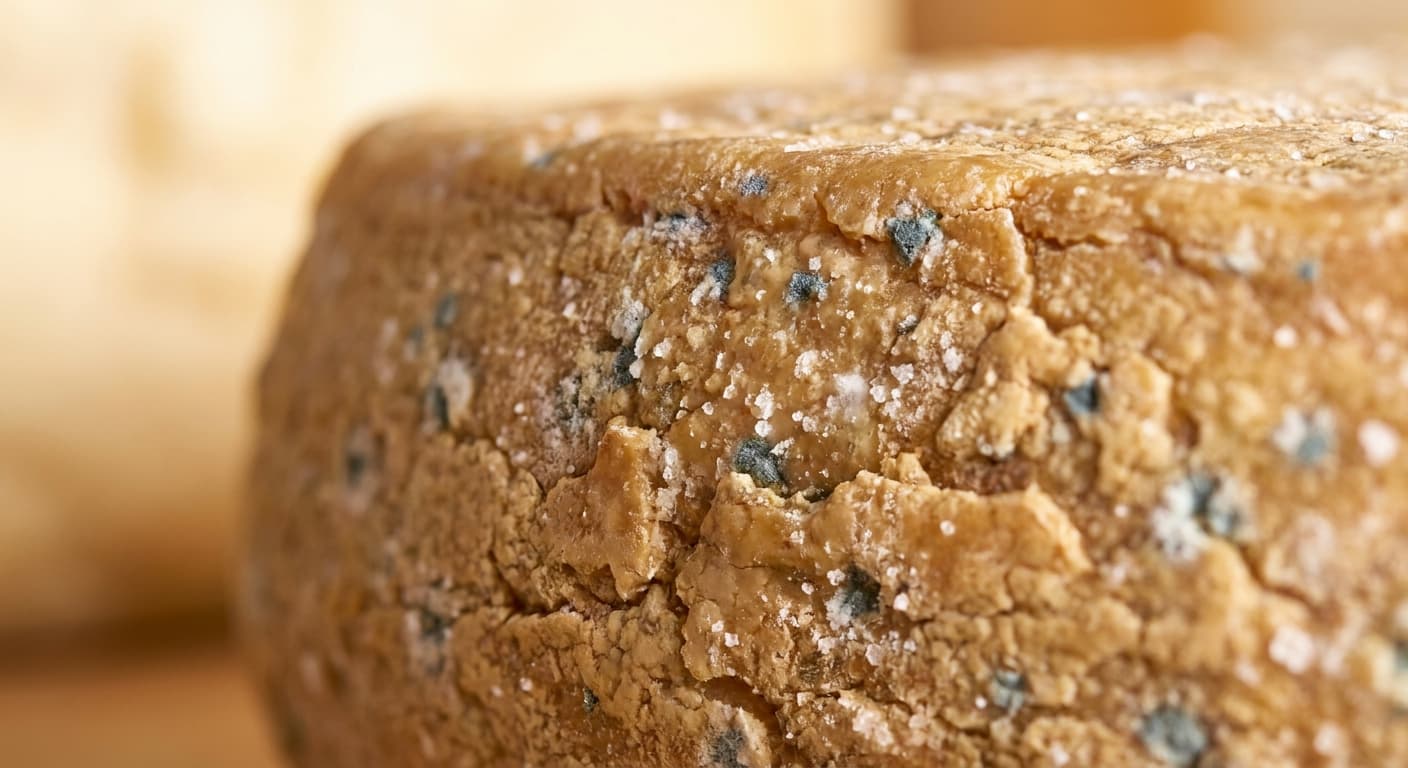
Usually too-dry humidity. Hard cheeses still want 80%+ RH during aging — lower and the rind shrinks faster than the interior, causing cracks. Humidifying your aging space or wrapping wheels in cloth and lard helps.