The Pillar
Every cheese is ultimately a portrait of its ingredients. The milk carries the character of an animal, a pasture, a season, a climate. The salt carries minerality from the sea or mine it came from. The cultures carry the genetic heritage of past batches. And terroir — that slippery, contested word — carries whatever is left. This pillar walks through the ingredient side of cheesemaking.
Milk is the main character
More than any other ingredient, milk defines a cheese. Its fat content, protein content, mineral balance, and native microbiota determine what the cheesemaker has to work with. Two cheesemakers with identical equipment and recipes but different milks will produce different cheeses. This is good news: it means sourcing milk is one of the most consequential decisions a cheesemaker makes, and worth thinking hard about.
Season changes milk, which changes cheese
Milk is not a constant. A cow on spring pasture produces milk higher in unsaturated fats and with a yellower colour than the same cow on winter hay. Late-lactation milk is protein-dense but can coagulate oddly. Spring milk from sheep yields very different cheese from autumn milk. Traditional cheese calendars map make-schedules onto seasonal milk: Vacherin Mont d'Or only exists in winter because that's when the milk changes to suit it.
What 'terroir' actually means
Terroir in cheese is sometimes dismissed as marketing, but there are genuine, measurable components. Native microbiota in raw milk varies by farm. Pasture plant species influence fatty acid profiles measurably. Altitude, climate, and cave conditions affect ripening. The microbial community of an aging space — built up over years — is unique to that space. Combined, these produce cheeses that a skilled taster can often place geographically, not because of marketing but because of chemistry.
Salt is not just seasoning
Salt in cheese does structural and microbial work, not just flavour work. It draws moisture from curd through osmosis, it lowers water activity to suppress unwanted microbes, it selects for salt-tolerant organisms in rind communities, and it firms the curd by changing calcium distribution. Different salts — fine sea salt, kosher, mineral-rich Cornish or Normandy salts — also contribute trace mineral flavour, particularly in brine-aged cheeses where they contact the rind long-term.
Articles in Ingredients
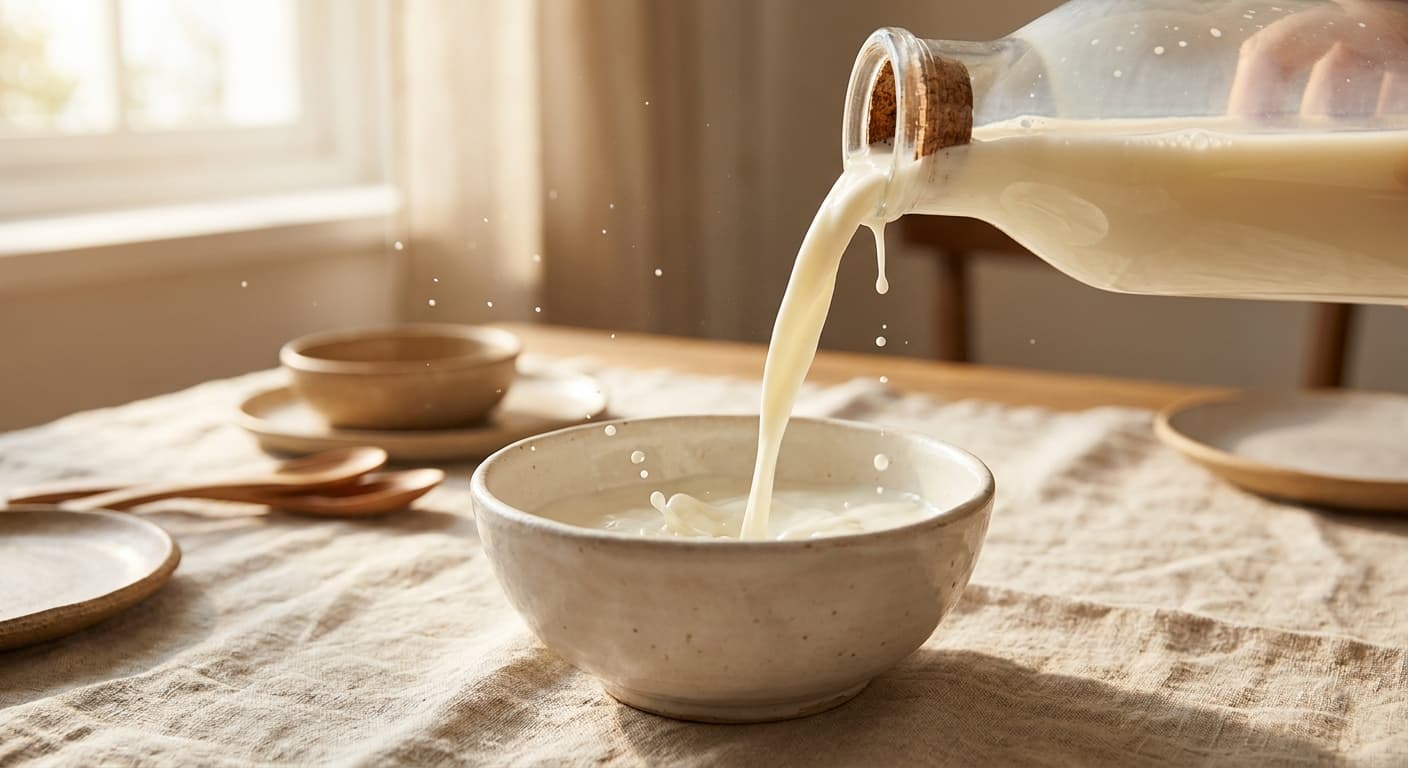
Cow, Goat, Sheep, Buffalo: Choosing Your Milk
A comparison of the four main cheesemaking milks — cow, goat, sheep, and buffalo — across fat, protein, flavour, and technique implications.
7 min readRaw vs Pasteurised Milk: The Real Trade-Offs
A clear-eyed look at raw and pasteurised milk cheese — what each offers in flavour, safety, and process, without the ideology.
7 min read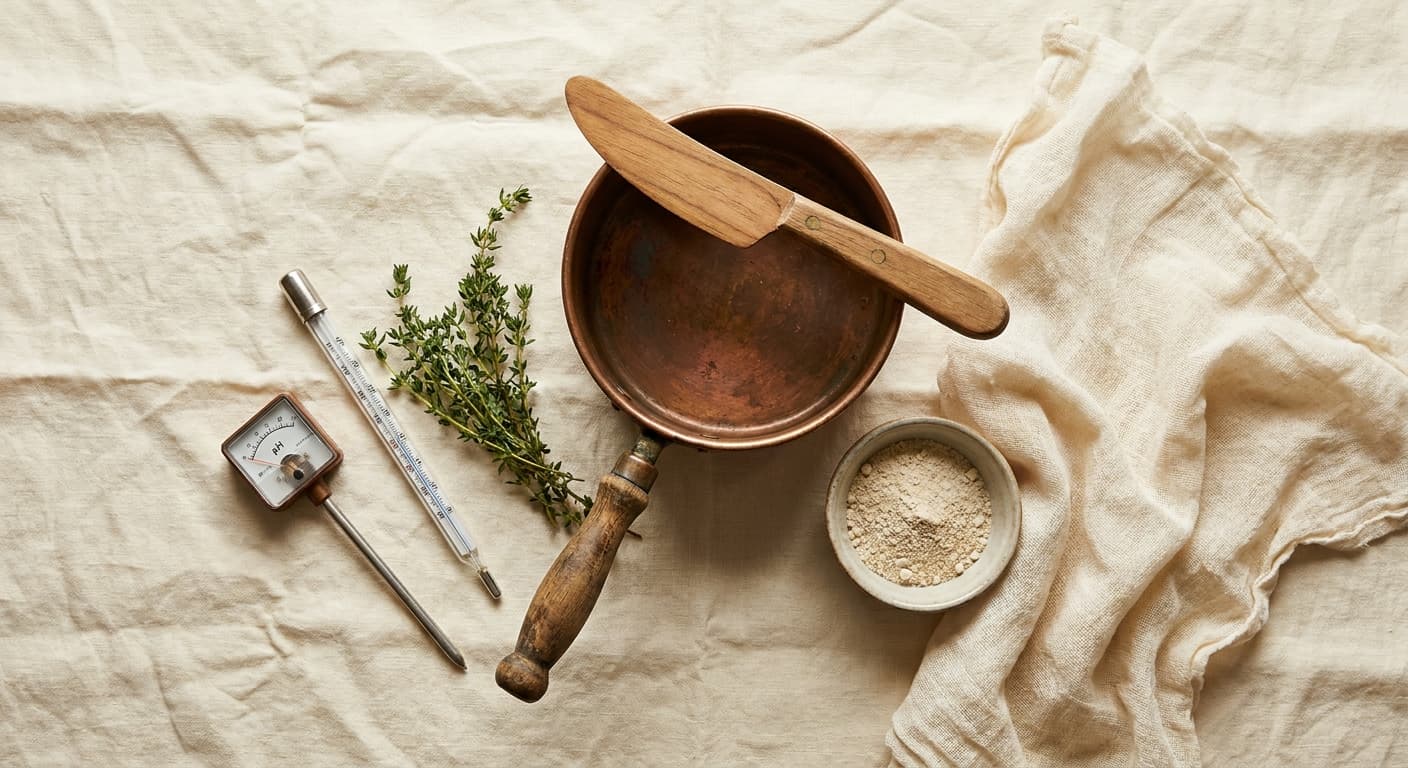
Salt: The Quiet Powerhouse
Salt in cheese does more than flavour — it draws moisture, selects microbes, and structures texture. A practical guide to salting methods and dosage.
7 min read
Herbs, Peppercorns, and Add-Ins: Flavour Beyond Milk
Adding herbs, spices, peppercorns, or other flavourings to cheese is an art of its own. When to add, how much, and what pairs with what.
6 min readTerroir: What Makes a Place's Cheese Taste Like That Place
Terroir in cheese is real, specific, and made of measurable parts: pasture species, native microbiota, climate, cave conditions. A look at each.
7 min read
Common questions about ingredients
Does it matter if I use supermarket milk?+
For fresh cheeses, not much. For aged cheeses, yes — supermarket milk is typically high-heat pasteurised and standardised, which removes most of the native microbiota and some of the whey protein structure. It works, but you'll never taste the farm. If good farm milk is available to you, use it.
Can I blend milks from different animals?+
Absolutely. Many traditional cheeses — Cabrales, Greek feta variations, certain Pyrenean cheeses — use mixed milks deliberately. Start with a 70/30 base (cow/sheep is a forgiving beginner blend) and experiment.
What milk should I start with?+
Whole cow's milk from a local dairy, minimally heat-treated, is the most forgiving starting point. It coagulates cleanly, is widely available, and most published recipes assume it. Goat and sheep come next; buffalo is wonderful but niche and expensive.