- ✓Total moisture is the obvious number. Moisture in non-fat substance (MNFS) is usually the more useful one.
- ✓Water activity (a_w), not total moisture, determines which microbes can grow.
- ✓You tune moisture before pressing, not after — curd handling is where most of the control lives.
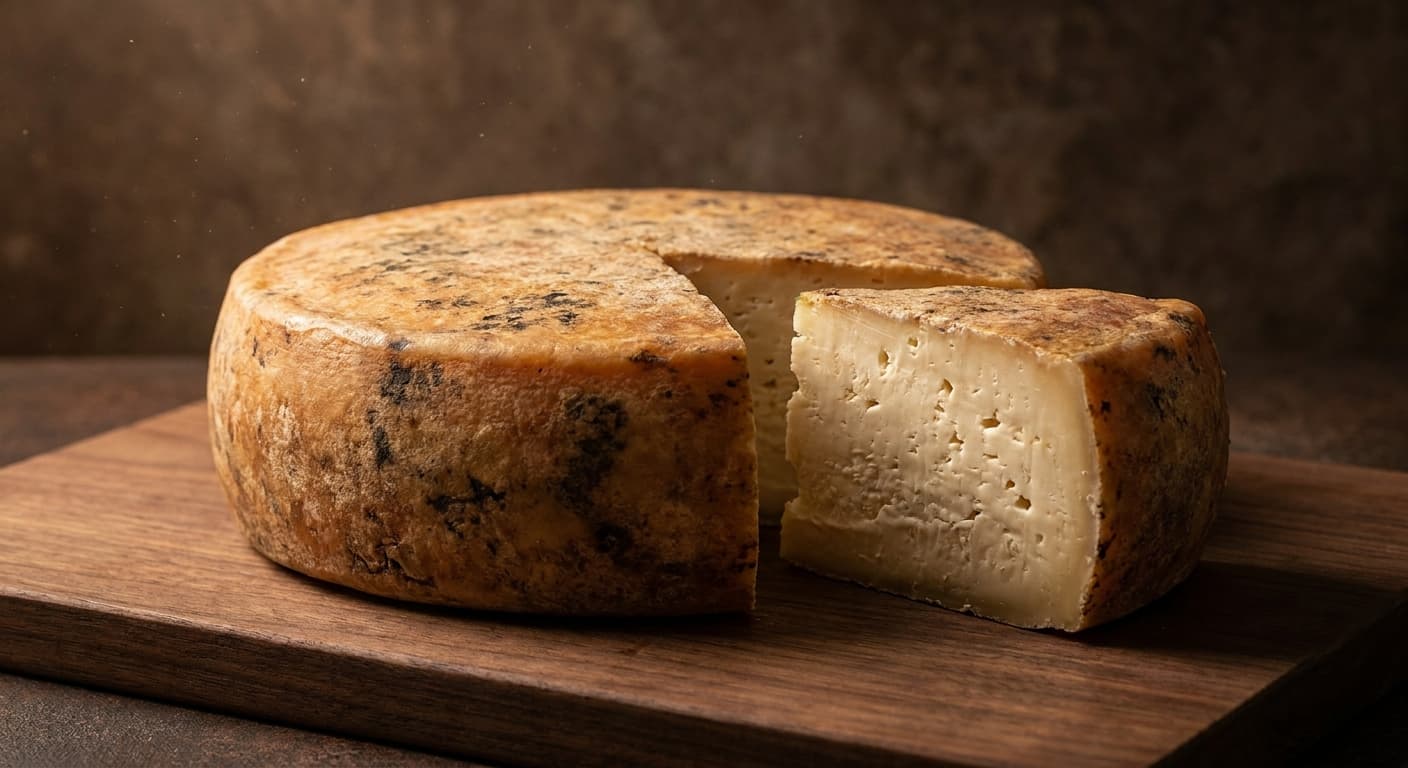
Moisture is not one number
Ask 'how much moisture is in this cheese?' and you're asking an ambiguous question. Total moisture (how much of the cheese's weight is water) tells you one thing. Moisture in non-fat substance (MNFS, how much water the protein phase is holding once you subtract the fat) tells you something much more useful — it's effectively how diluted the casein matrix is, and diluted protein matrices feel softer regardless of fat content.
Syneresis: the craft of getting water out
Once the curd is formed, moisture removal is a continuous, tunable process called syneresis. Cutting curd into smaller pieces exposes more surface area for whey to leave. Stirring keeps pieces from matting and encourages contraction. Warming the vat (cooking the curd) tightens the protein matrix and forces more whey out. Dropping pH in parallel strips calcium and tightens the matrix further. Every one of these levers is something a cheesemaker dials to hit a target moisture.
Water activity: the microbiology number
Microbes don't care how much total water is in your cheese — they care how much of it is available to them, which is what water activity measures. Salt, sugar, and tight binding to proteins all lower a_w. Lactic bacteria can happily grow above 0.93. Most spoilage moulds need above 0.85. Below 0.75 you're into aged Parmigiano territory, where almost nothing grows. This is why a dry, salty cheese can age for years and a fresh one spoils in days.
Texture: it's not just moisture
Texture — the bit you feel with your teeth — is driven by three things working together: moisture (how lubricated the protein matrix is), calcium retention (how rigid the matrix is), and the degree of proteolysis during aging (how intact the protein chains are). A young Cheddar is firm and slightly squeaky because calcium is still bound and proteolysis hasn't started. A year-old Cheddar is crumbly and dissolves on the tongue because proteolysis has cut the long chains short. Same cheese, different textures, same moisture.
Practical moisture control
- Cut smaller for drier cheese — pea-sized for hard, walnut-sized for soft.
- Cook higher for drier — 52°C+ for grana-style, 32°C for washed-curd soft.
- Stir longer and more vigorously to expel more whey before draining.
- Pre-salting the curd draws out moisture through osmosis before the cheese is even in the mould.
- Press harder and longer to consolidate and expel residual whey from a hard cheese.
Frequently asked
My cheese came out too wet. Can I fix it after pressing?+
Only slightly. You can age it more aggressively and lose some water to the air, but the core moisture is mostly locked in at pressing. Fix it in the vat next time.
Why do some mature cheeses feel 'moister' at a year than at six months?+
They don't physically contain more water — but proteolysis has broken down the protein network, and a more fragmented matrix releases moisture to the palate more readily. It's a perceptual effect, not a hydration one.