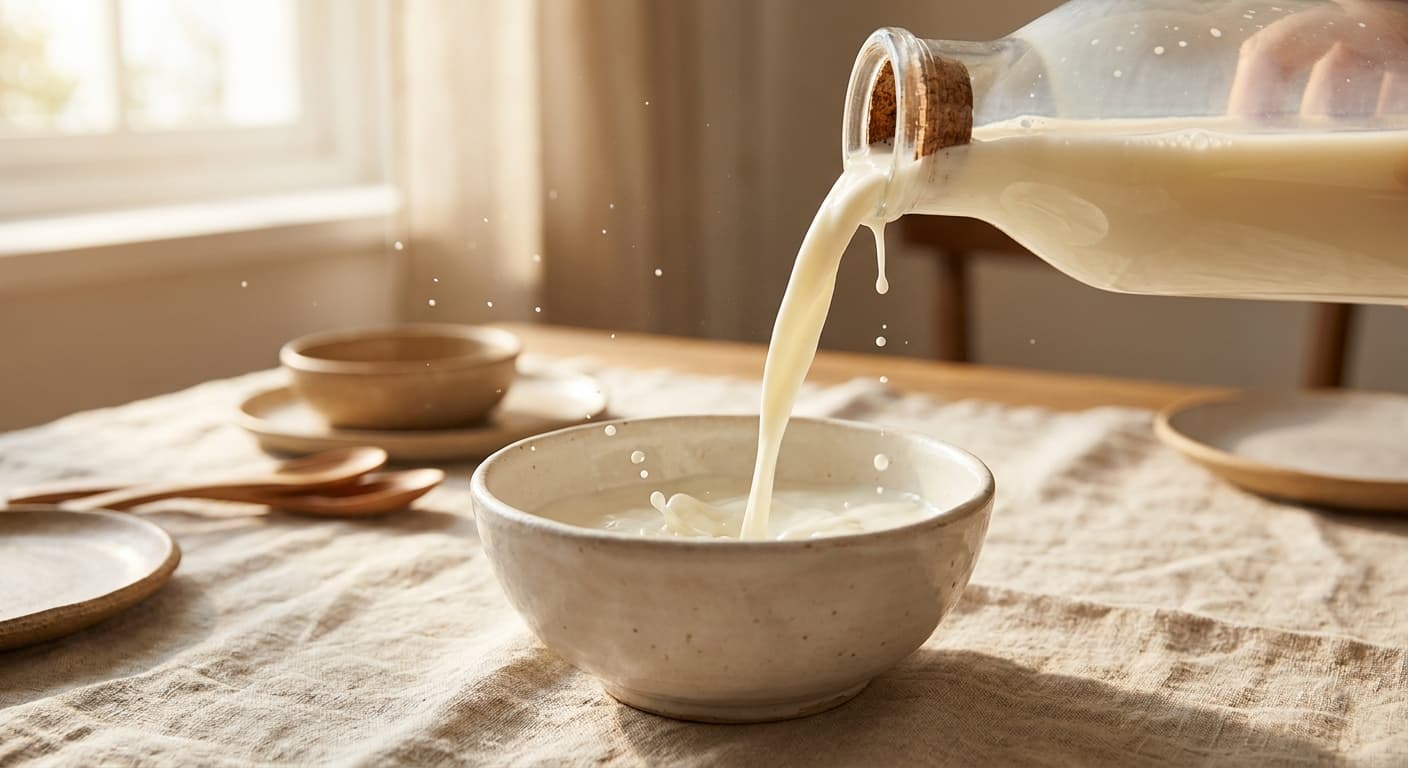
- ✓Casein exists in milk as micelles — spherical protein bundles coated in hair-like κ-casein.
- ✓Rennet cleaves κ-casein, which destabilises the micelles and lets them bond into a gel.
- ✓Acid coagulation works by neutralising charge instead; the resulting curd is softer and less melty.
The casein micelle: a protein hedgehog
About 80% of the protein in cow's milk is casein, and almost all of it exists as micelles — spherical aggregates 50 to 500 nanometres across, each built from tens of thousands of individual casein molecules. The micelle holds together partly through hydrophobic interactions, partly through bridges of calcium phosphate. The outside is coated in κ-casein, whose charged, flexible tails stick out like fur and keep the micelles apart in suspension.
Rennet: a pair of scissors, precisely aimed
Rennet's active enzyme — historically chymosin from the fourth stomach of unweaned calves, now often produced by fermentation using cloned genes — cuts κ-casein at a single specific bond. With the hair coat removed, the remaining micelles no longer repel each other; calcium ions bridge them together and a network forms. This enzymatic step is fast and precise, which is why enzymatic curd tends to be firm, elastic, and retains moisture well.
Acid coagulation: a different animal
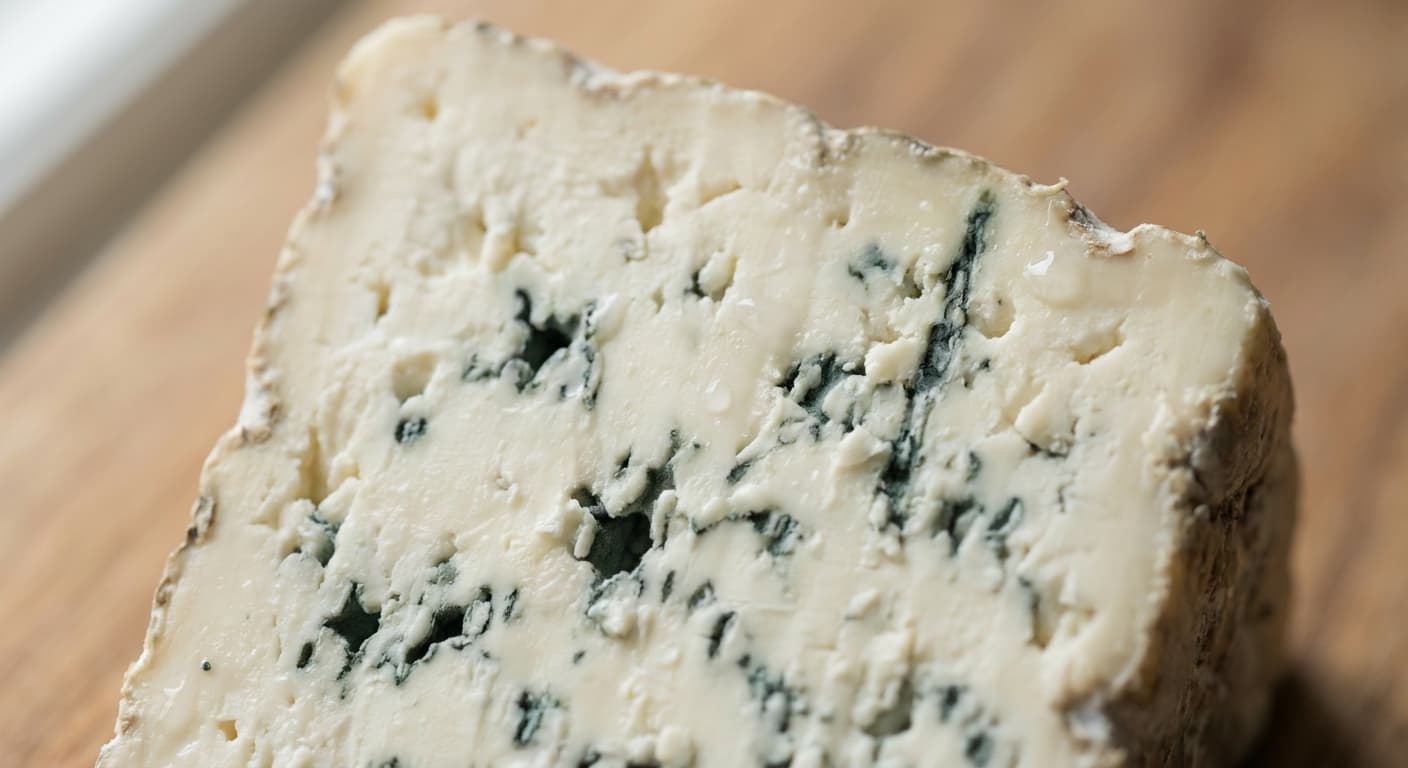
When milk acidifies enough — to around pH 4.6, the isoelectric point of casein — the negatively charged micelles lose their charge and no longer repel each other. Calcium has by then largely dissolved out of the network into the serum. The resulting curd is soft, short-textured, and poor at melting: fresh cheeses like cottage cheese, paneer, and most ricottas rely on acid coagulation, pure or mixed.
Mixed coagulation: the interesting middle ground
Most cheeses in the world are made by a mix of acid and enzymatic coagulation — starter bacteria acidify the milk slowly while rennet does its cutting work, and both processes contribute to the final curd. The ratio matters. A cheese that's set fast with lots of rennet at high pH (Parmigiano, Gruyère) will be very different from one set slowly at low pH with minimal rennet (Camembert, lactic chèvre).
Flocculation, setting, and the 'clean break'
Rennet action happens in three observable phases. First, nothing visible — the enzyme is cleaving κ-casein. Then flocculation begins, where fine protein clumps appear if you swirl the milk. Finally the whole volume sets into a gel firm enough to give a clean break under the edge of a knife. Traditional cheesemakers time those phases and use the flocculation-to-cut ratio to decide when the curd is ready.
- Flocculation point: first visible clumping, usually 10–15 minutes after adding rennet.
- Multiplier: a factor (2–6×) applied to flocculation time to pick the cut time.
- Lower multiplier → firmer, lower-moisture cheese. Higher multiplier → softer, higher-moisture cheese.
What can go wrong
Slow or no set is usually a rennet, calcium, or temperature problem. Old rennet loses activity. UHT or very heavily pasteurised milk denatures whey proteins that then interfere with κ-casein access — often fixed with a small dose of calcium chloride. Cold milk sets slowly. Very acidic milk (already low pH at renneting) sets fast but produces a weak, grainy curd. Diagnose by checking temperature, fresh rennet activity, and starting pH.
Frequently asked
Why is vegetarian rennet fine but 'junket' rennet sometimes isn't?+
Modern fermentation-produced chymosin is functionally almost identical to calf chymosin. Older microbial rennets (from Rhizomucor or similar moulds) can be more proteolytic and cause bitterness in aged cheese — fine for fresh cheese, worth avoiding for long-matured wheels.
Do I always need calcium chloride?+
No. Raw and minimally pasteurised milk usually doesn't need it. Supermarket pasteurised milk benefits from a small dose (around 0.2 ml of 32% solution per 4 litres). Never use it with raw milk unless you know why.