- ✓Target pH by step, not by time — the numbers are what matter.
- ✓Every 0.1 drop in pH has a measurable effect on texture and moisture.
- ✓A calibrated pH meter is one of the two or three tools actually worth buying.
What pH is actually measuring
pH is a logarithmic scale of hydrogen ion concentration. A pH of 6.6 — where fresh cow's milk sits — is roughly 100 times less acidic than a pH of 4.6, where a fresh ricotta or cottage cheese lands. That logarithmic nature is the reason small-looking numbers matter: moving from 5.3 to 5.1 isn't a 4% change, it's a 58% change in free hydrogen ions. Cheesemakers often track tenths of a pH unit because the cheese notices them.
Where acidity comes from in cheesemaking
Virtually all acidification during cheesemaking comes from starter bacteria converting lactose into lactic acid. A mesophilic starter at ambient make-temperatures acidifies steadily; a thermophilic starter at higher cooking temperatures acidifies aggressively and then dies off as moisture leaves the curd. The rate of acidification is governed by inoculation level, temperature, and the residual lactose available.
Titratable acidity (TA) measures total acid present; pH measures the active acid interacting with the casein. Both are useful. TA is easy to read in a lab; pH is what the casein actually 'feels'.
How pH sculpts the curd
Casein micelles carry a negative surface charge and are held together by bridges of calcium phosphate. As pH falls, hydrogen ions neutralise the charges and dissolve out those calcium bridges. Below pH ~5.2, the calcium pulls out of the protein matrix in earnest, and the network tightens and contracts, expelling whey and losing its ability to melt smoothly. Cheeses aimed at a clean melt (mozzarella, raclette) finish at a higher pH than cheeses aimed at a crumble (feta, aged Cheddar).
Target pH by style
Measuring pH properly
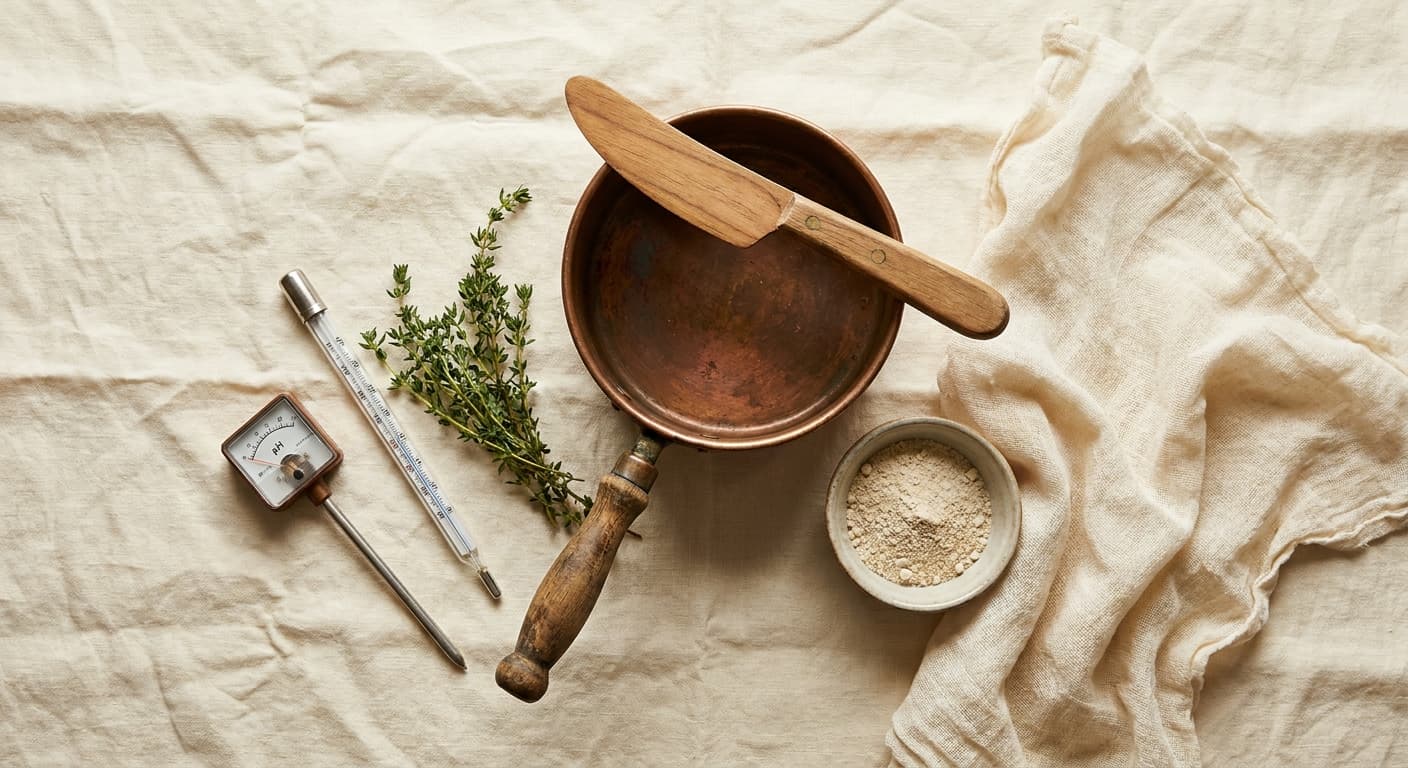
Use a proper cheese-capable pH meter with a spear electrode, not a pool-testing pen. Calibrate every session with fresh 7.0 and 4.0 buffer solutions, store the electrode in KCl storage solution (never water), and rinse and blot between readings. Stick the probe directly into the cheese at the point you care about — surface readings are different from centre readings, and that difference is informative.
- Calibrate before every cheesemake — drift is the most common source of 'mystery' bad batches.
- Record pH at fixed points (set, cut, drain, press, pre-salt, out of press) — patterns emerge across batches.
- If numbers look wrong, trust the meter first but always cross-check with acid taste and curd feel.
Troubleshooting through the lens of pH
Cheese that's too rubbery with low moisture? Probably finished too acidic, stripping calcium too aggressively. Cheese that tastes bland and pasty? Possibly drained too early, before acid development had a chance to concentrate flavour precursors. Rind that won't form, or that forms wrong? Your surface pH might not be where the ripening organisms need it. pH is a root-cause variable far more often than not.
Frequently asked
Can I use pH strips instead of a meter?+
For rough triage, yes. For actual cheesemaking, no — the resolution and repeatability aren't there. A mid-range digital pH meter pays for itself in the first month.
Why does my pH keep dropping after pressing?+
That's normal: residual lactose keeps fermenting until the starter runs out of fuel or moisture. Factoring post-press drift into your target is part of the craft.