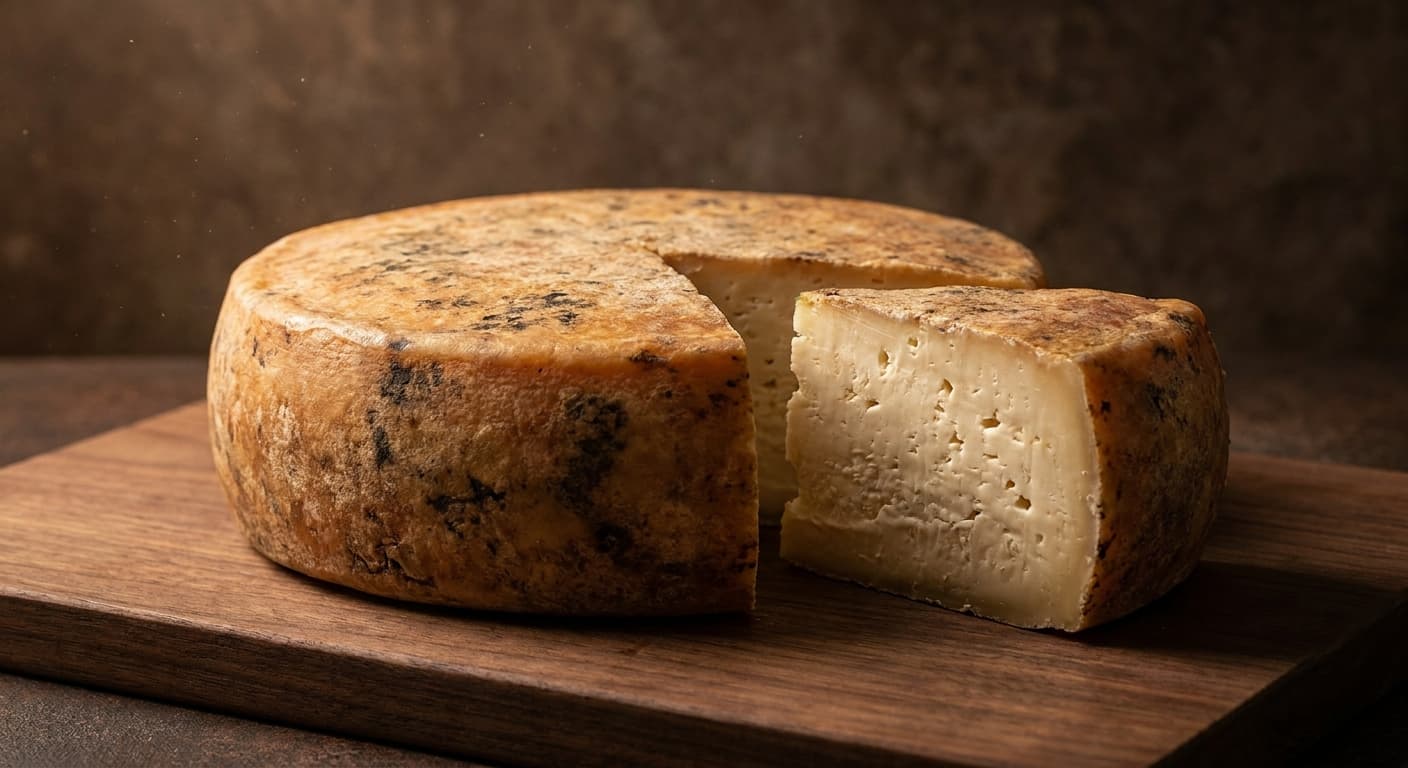
- ✓Salt lowers water activity — that's how it controls microbial growth.
- ✓Three main methods: curd salting (mixed in), dry salting (rubbed on), brine salting (submerged).
- ✓Target salt content varies by style, usually 1.5% to 4% of cheese weight.
What salt does beyond flavour
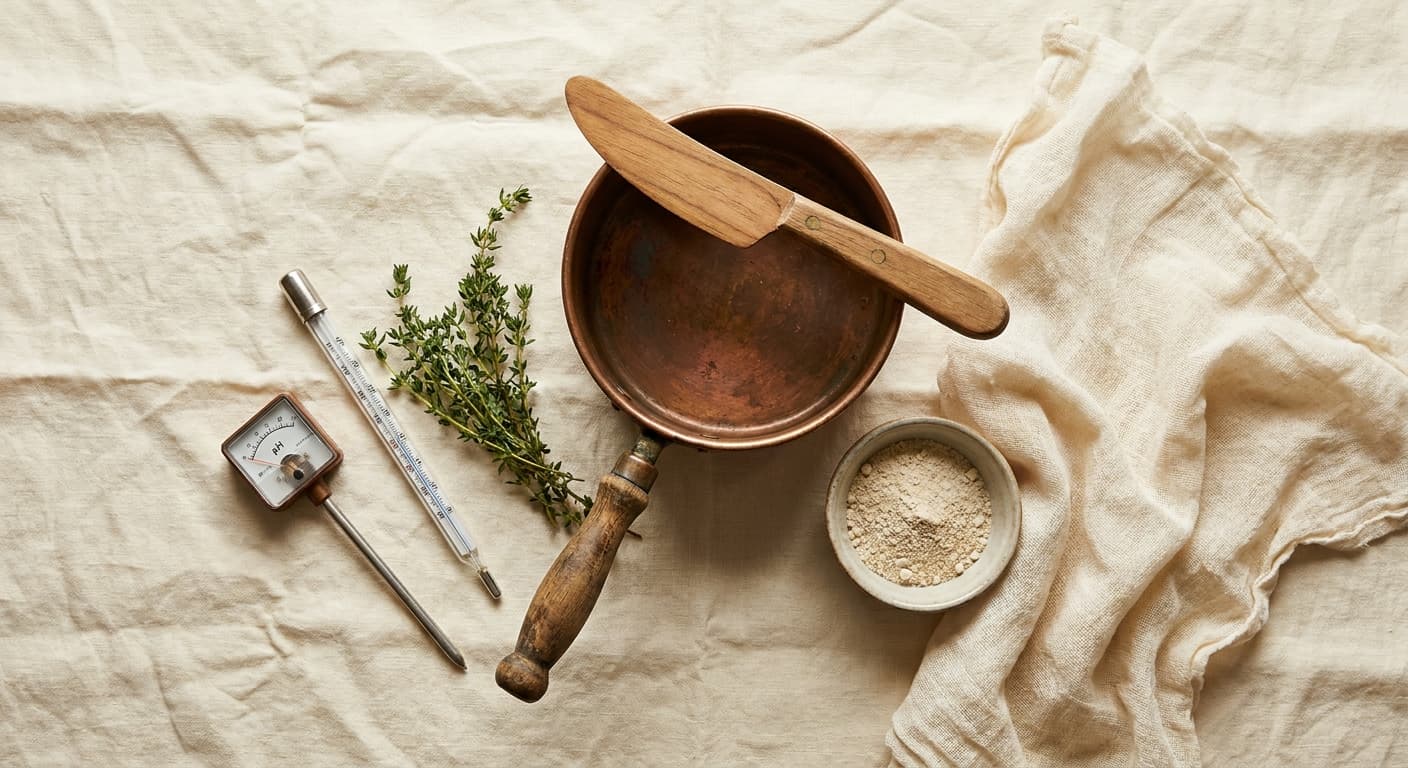
Salt in cheese is doing four jobs simultaneously. First, flavour — direct saltiness balances acidity and fat. Second, osmotic moisture removal — salt dissolved in free moisture draws more water out of the curd. Third, microbial selection — lowering water activity and raising ionic strength suppresses spoilage microbes while favoured organisms remain active. Fourth, structural — sodium ions interact with the casein network, changing its rigidity and how it holds moisture.
The three main salting methods
- Curd salting: salt is mixed through the milled curd before pressing (classic English Cheddar style). Fast, uniform distribution, works best with pressed cheeses.
- Dry salting: salt is rubbed onto the surface of a formed cheese, often over several days (classic hard cheese style before brining became common). Good rind development, concentrated surface salt.
- Brine salting: the cheese is submerged in a saturated salt brine for hours to days, depending on size. Gentle, uniform, especially good for hard cheeses and pasta filata styles.
How much salt?
Target salt content is expressed as salt-in-moisture (S/M) in technical contexts, because salt concentration in the water phase is what microbes experience. A Cheddar typically finishes around 4.5–5% S/M, which translates to roughly 1.7–1.9% salt by weight. A feta or washed-rind cheese can reach 3–4% by weight. A fresh mozzarella is only 1–1.5%. More salt isn't better — it slows flavour development, can inhibit rind microbes, and makes a cheese unpleasantly salty.
Making and maintaining a brine
A saturated cheese brine is roughly 23% salt by weight — about 230 g of salt per litre of water, with a pinch of calcium chloride and a splash of vinegar or whey to bring pH close to the cheese's (about 5.2). This last step matters: plain fresh brine is alkaline relative to cheese, and submerging a cheese in alkaline brine pulls calcium from the surface, causing 'brine burn' — a sticky, slimy rind. Properly acidified, saturated brine can be reused indefinitely with top-ups; many traditional producers have brines that are decades old.
Use non-iodised salt for cheesemaking. Iodine in table salt can inhibit starter bacteria and rind microbes — a subtle effect but a real one. Dairy salt, kosher salt, or plain sea salt without added iodine are all fine.
Brining time by cheese size
Brining time scales roughly with the square of the cheese's shortest dimension (diffusion is slow). A small 500 g tomme needs 2–3 hours per side; a 2 kg Gouda wants 10–12 hours per side; a 40 kg Parmigiano-Reggiano wheel sits in brine for 20–25 days. Turn the cheese every few hours in shorter brines to ensure even uptake. Sprinkle salt on the emerging face while brining to keep the above-water surface equally salted.
Frequently asked
Can I use sea salt instead of cheese salt?+
Yes — non-iodised sea salt works fine. For brining, just ensure it's clean and free of anti-caking agents (some commercial salts have additives that cloud brines). Trace minerals in sea salt can add subtle complexity.
My cheese tastes too salty. What went wrong?+
Usually over-brining or too much curd salt. Also check your salt-in-moisture calculation: a cheese with lower moisture will taste saltier even at the same weight percentage of salt. Adjust dose by moisture target, not by habit.