- ✓Milk composition is driven by mammary physiology, not the cheesemaker — but the cheesemaker lives with the consequences.
- ✓Lactation stage matters: late-lactation milk coagulates differently from early-lactation milk.
- ✓High somatic cell count is both a welfare indicator and a cheesemaking problem.
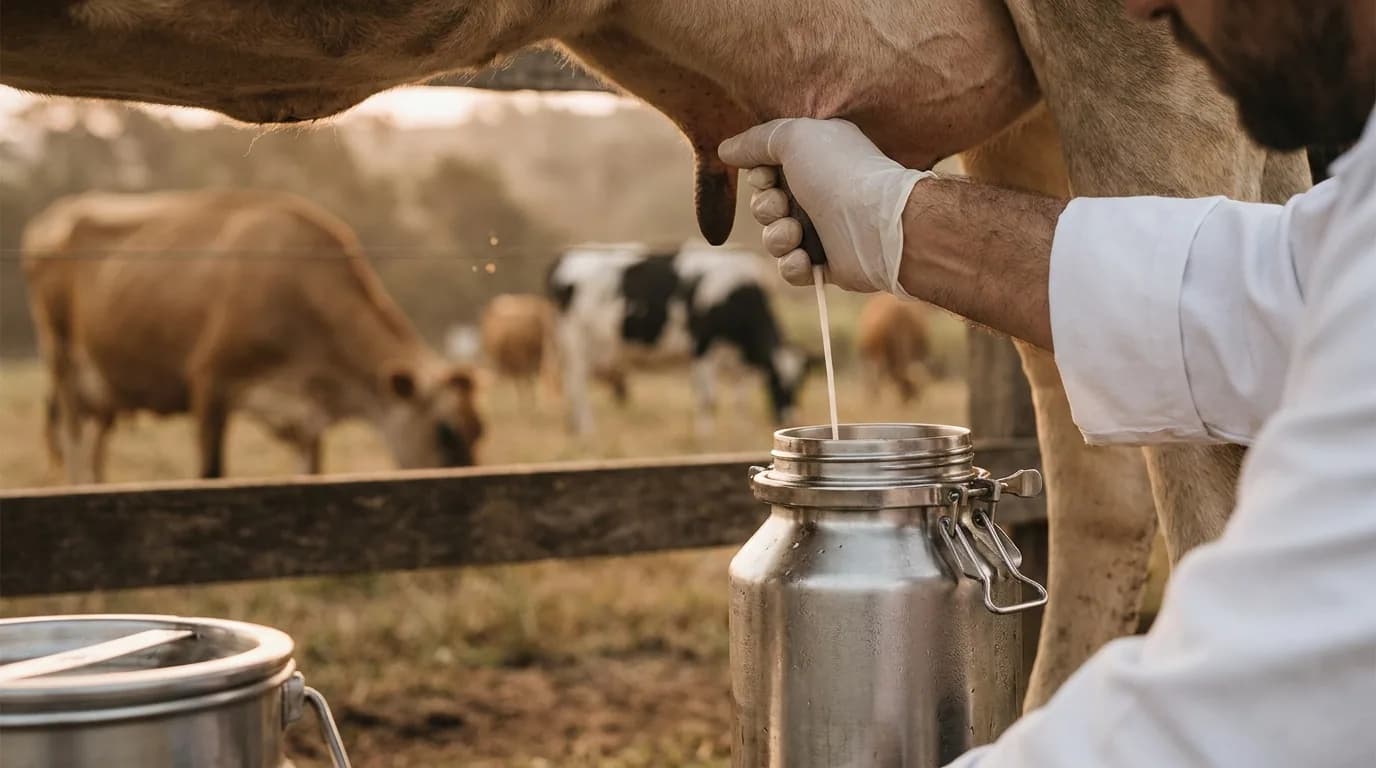
The mammary gland: a chemical factory with fur
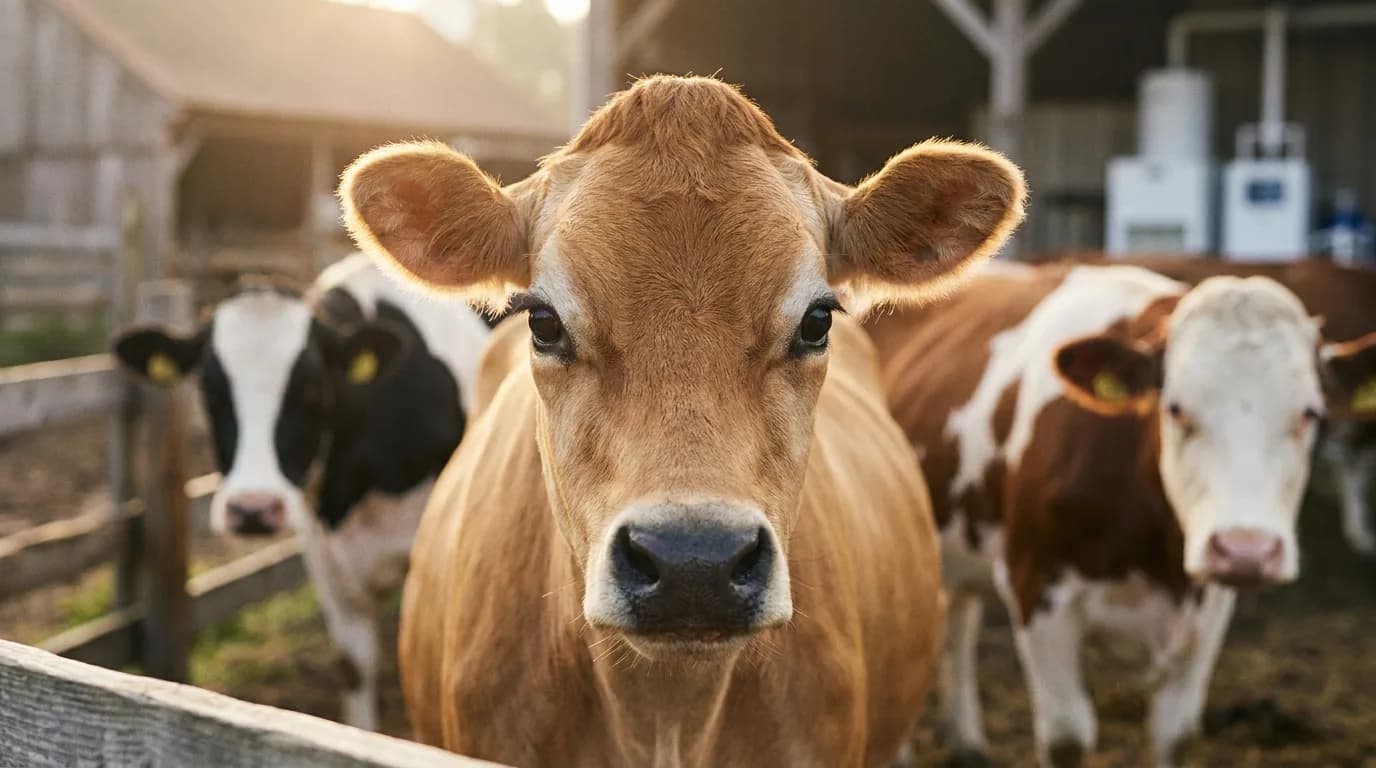
Milk is synthesised in the alveoli of the mammary gland — millions of tiny sacs lined with secretory epithelial cells. Those cells take up glucose, amino acids, and fatty acid precursors from the blood, and assemble lactose, casein, whey proteins, and milk fat inside the cell. Casein is packaged into micelles inside Golgi vesicles. Fat is extruded as membrane-wrapped globules through the cell's apical surface. Water follows by osmosis. The whole secretion is then released into the alveolar lumen and, under the influence of oxytocin at milking, ejected into the ducts.
Every litre of milk requires roughly 400–500 litres of blood to flow through the udder. A high-producing dairy cow is a metabolic athlete working near physiological limits — which is why stress, illness, and diet changes show up in milk composition almost immediately.
Colostrum, transition milk, and the real start of lactation
The first milk after calving is colostrum — thick, yellow, loaded with immunoglobulins meant for the calf. Cheesemakers do not use colostrum: it will not set cleanly with rennet, it clots when heated, and it carries antibodies and growth factors that belong in a calf, not a wheel. Transition milk, over roughly the first week, gradually shifts toward mature milk. Commercial dairies discard the first several milkings as a matter of both welfare and product-quality standards.
Lactation stage shapes the vat
Mature milk itself is a moving target. Early-lactation milk (first ~60 days) runs higher in volume and lower in solids. Mid-lactation milk (roughly 60–200 days) is the 'reference' milk that recipes assume. Late-lactation milk (post-peak, approaching dry-off) has rising fat and protein, but also rising somatic cells, rising free fatty acids from lipolysis, and altered casein composition — and it often coagulates slowly or weakly. This is why seasonal dairies planning fixed drying-off periods have such predictable cheese-yield curves, and why late-lactation milk is better routed to powder or butter than to long-aged wheels.
Diet goes straight into the fat
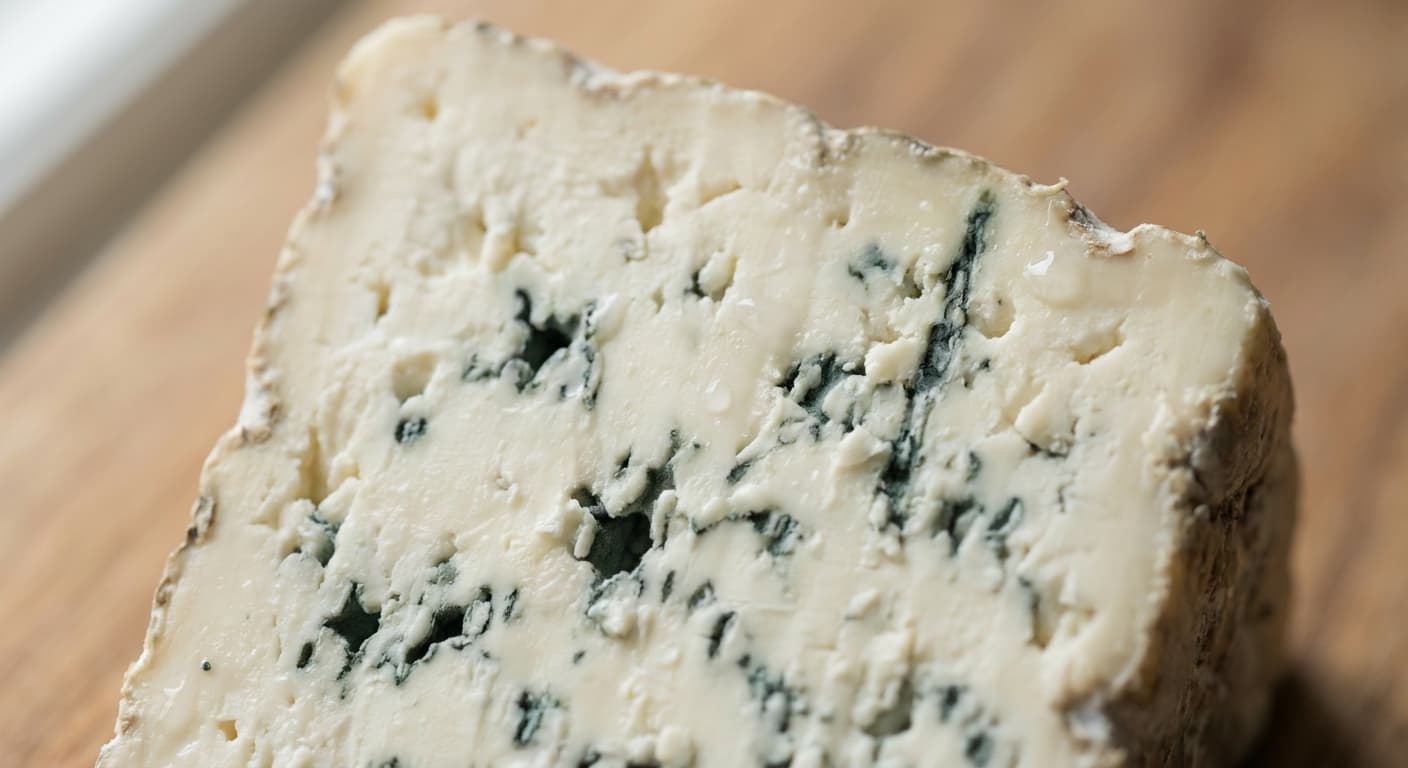
Ruminant digestion is the secret ingredient. Microbes in the rumen break down forage into volatile fatty acids, which the cow absorbs and uses to build milk fat. Short-chain fatty acids (butyric, caproic, caprylic) come almost entirely from rumen fermentation; they are the fatty acids that, once freed by lipolysis in aged cheese, create the signature piquancy of pecorinos and blues. Fresh pasture loads the milk with beta-carotene (the yellow colour of summer butter), with conjugated linoleic acid, and with subtle aromatic compounds that survive into the cheese.
- Hay-and-silage winter diets produce whiter, slightly lower-CLA milk.
- Fresh pasture produces yellower, more aromatic milk — and often better-complexity cheese.
- High-grain diets push fat lower and can shift the fatty-acid profile in ways that affect aged-cheese flavour.
Somatic cells: the health signal you can't ignore
Somatic cell count (SCC) measures the concentration of white blood cells and shed epithelial cells in milk. It rises sharply during mastitis — an infection of the udder — and is a direct window into herd health. Beyond welfare, high SCC is a cheesemaking problem: elevated plasmin activity breaks down casein before you ever get to the vat, yields drop, and aged-cheese bitterness rises. Good dairies monitor SCC tank-by-tank and cow-by-cow. A regulatory ceiling (typically 400,000 cells/ml for bulk milk in the EU and most of the US) is a minimum, not a target.
Species differ biologically, not just stylistically
Goat's milk has smaller fat globules that don't cream (which is why goat's-milk cream is difficult to separate) and a different casein profile with less αS1-casein — producing a softer, more fragile curd. Sheep's milk is the richest commonly used dairy milk, with double the fat and protein of cow's milk, which is why it punches so far above its weight in terms of yield. Water buffalo milk is higher still in both fat and total solids, with a distinctive triglyceride profile and very pale, almost porcelain-white appearance. These are not just stylistic differences — they are biological differences in what the mammary gland is capable of secreting.
Frequently asked
Why do some of my batches behave differently even with the same recipe?+
Almost always a milk-biology issue: different lactation stage, a shift in feed, a subclinical mastitis in the herd, or seasonal variation. Recipes are only as stable as the milk they're applied to. Build a relationship with whoever is supplying your milk and ask about lactation stage and herd health.
Is organic or pasture-raised milk 'better' for cheese?+
Not categorically. Pasture-raised milk typically carries more aromatic compounds and higher CLA, which many cheesemakers value. Organic certification is a management standard, not a compositional one. Taste the milk first, read the feed strategy, and decide per-dairy rather than per-label.