- ✓Fermentation-produced chymosin (FPC) replaced calf rennet for most commercial cheese by the late 1990s.
- ✓Precision-fermented caseins (Perfect Day, Formo, New Culture) can build 'animal-free' dairy products that behave recognisably like cheese.
- ✓CRISPR-edited dairy animals exist in research; regulatory pathways are mixed.
FPC: the quiet revolution
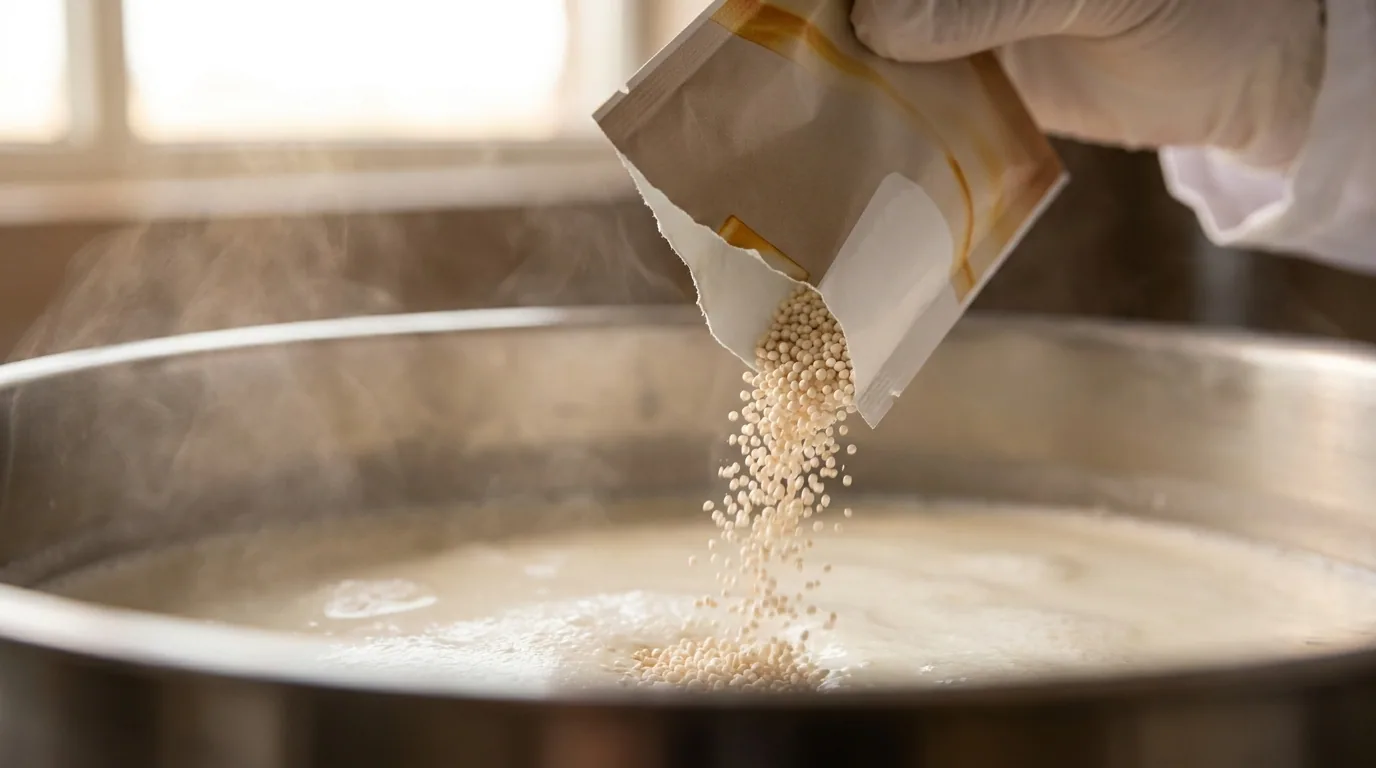
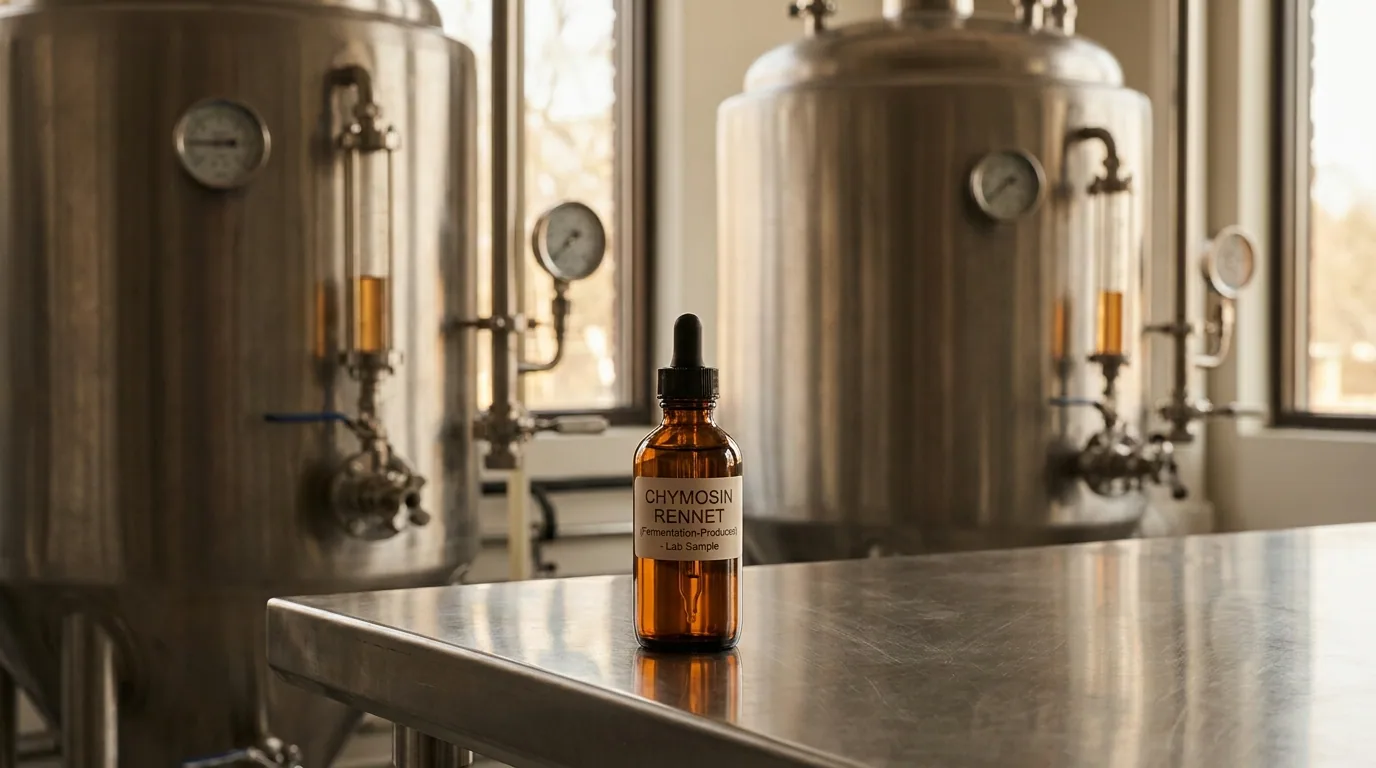
In the late 1980s, the gene for bovine chymosin (the active enzyme in calf rennet) was cloned and expressed in microbial hosts — Kluyveromyces lactis, Aspergillus niger var. awamori, and Escherichia coli were all explored. The FDA approved the first recombinant chymosin product in 1990. Today fermentation-produced chymosin accounts for a large majority of rennet used in commercial cheese in North America and Europe. The enzyme itself is bovine — identical in amino acid sequence to calf chymosin — but it is produced by fermentation and purified away from the microbial host. The final rennet preparation contains no live GMO; by FDA, EFSA, and many national classifications, the cheese itself is not considered a GMO product.
Defined-strain cultures vs artisanal mixed cultures
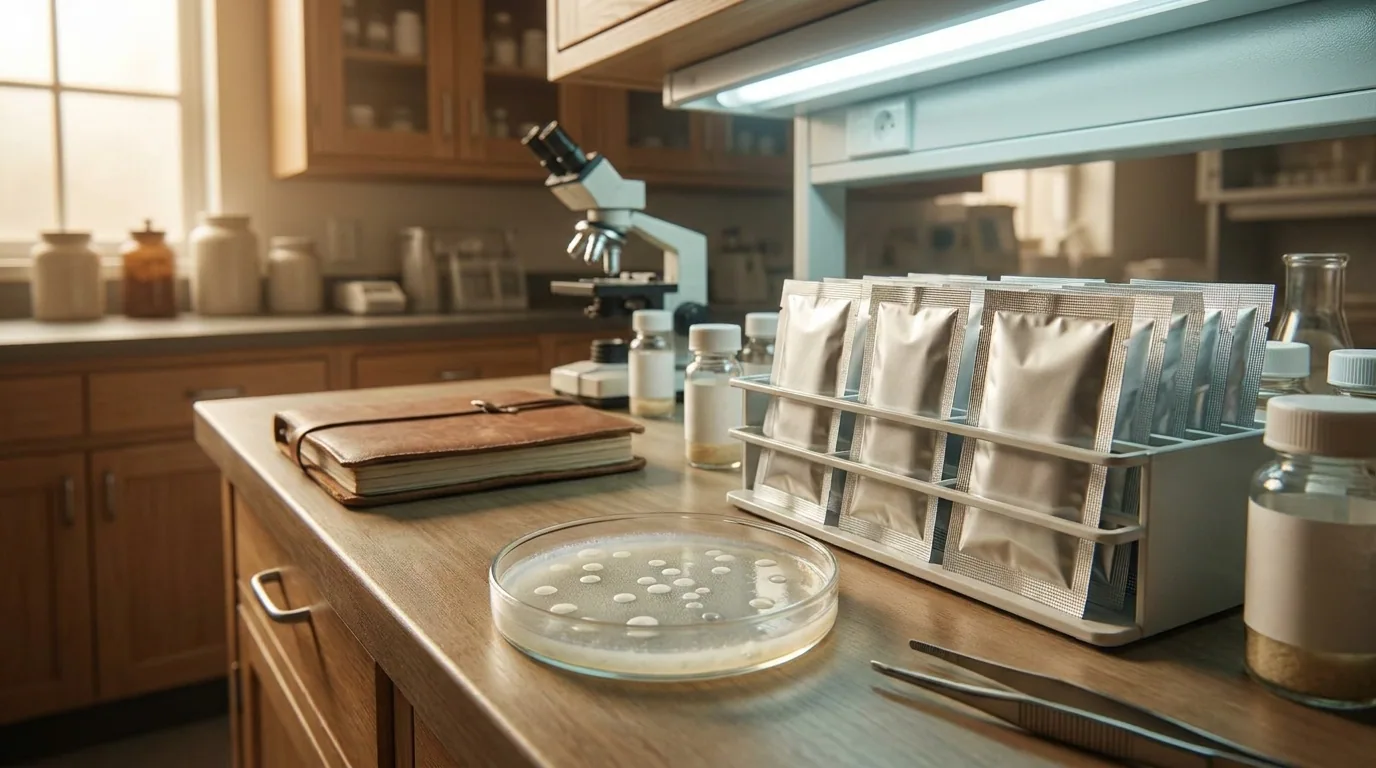
A traditional raw-milk cheesemaker inherits a mixed microbial culture — often a back-slopped whey starter whose exact composition nobody has ever fully characterised. A modern commercial cheesemaker pitches a defined-strain starter where the precise composition of each strain is documented, acidification kinetics are predictable, and phage susceptibility is tested. Both approaches make excellent cheese. Defined strains give consistency and safety; undefined traditional starters give complexity and regional identity that no lab culture has yet fully replicated. Serious modern producers increasingly blend both: defined strains for the acidification backbone, a small inoculation of traditional whey or environmental culture for complexity on top.
Genetically modified starter cultures: rarely used
GM LAB — starter strains with added or modified genes — exist in research and in very limited production. Regulatory caution, consumer sensitivity, and the fact that natural-selection-derived phage-resistant strains work well have kept GM starters out of the mainstream commercial cheese supply. This is an area where public-facing messaging (dairies emphasise 'no GMOs in our starter') and technical reality (fermentation-produced chymosin is broadly accepted because the host microbe is not in the final product) coexist more comfortably than outsiders tend to assume.
Precision fermentation: the next disruption
Precision fermentation produces specific proteins — in the dairy case, casein or whey proteins — by inserting the relevant bovine gene into a microbial host (yeast, typically) and fermenting at scale. Companies like Perfect Day (whey proteins), Formo, and New Culture (casein for mozzarella) have brought real products to market. The proteins are bio-identical to their bovine originals. Combined with plant fats, salt, water, and conventional starter cultures, they can be assembled into products that coagulate, stretch, melt, and — with aging — develop recognisable cheese flavours. Whether consumers accept them as 'cheese' is a marketing question more than a scientific one.
- Precision-fermented whey proteins: already in commercial ice cream, cream cheese, and protein powders in several markets.
- Precision-fermented casein: a harder engineering problem (larger, more complex proteins); commercial-scale mozzarella is the near-term target.
- Precision-fermented chymosin: already standard for 30+ years — the template the rest of the category is following.
CRISPR-edited dairy animals: real, limited, contested
Researchers have used CRISPR and related tools to produce hornless (polled) dairy cattle, A2-A2 cattle, and cattle with proposed disease-resistance edits. These efforts are scientifically mature enough to work; regulatory pathways are uneven. An early polled-cattle line at UC Davis turned out to carry an unintended plasmid-integration event — a regulatory and scientific cautionary tale about off-target edits that slowed the field considerably. CRISPR-edited dairy products are not, as of now, a meaningful share of the commercial milk supply, but the direction of travel is clear.
What's actually in the cheese you sell
For a practical cheesemaker, the honest summary is this: the rennet is almost certainly fermentation-produced chymosin unless you explicitly source calf or vegetable coagulant. The starter is almost certainly a defined-strain blend from one of a handful of global culture houses. The milk, unless you are a producing dairy, came from a herd whose breed genetics were chosen for cheese or fluid yield and whose diet, health, and lactation stage determined what hit your vat. Knowing those upstream decisions is no longer optional — it is the baseline literacy of a contemporary cheesemaker.
Frequently asked
Is a cheese made with FPC still considered 'traditional'?+
Depends on the tradition. Most PDO/DOP cheeses (Parmigiano-Reggiano, Comté, Roquefort, and others) specify animal rennet and do not permit FPC. Most commercial supermarket cheeses use FPC by default. Tradition is a regulatory category, not a chemical one.
Will precision-fermented cheese replace dairy cheese?+
Not anytime soon at the artisan level. At the commodity level — fast food mozzarella, industrial cream cheese — it is already competing seriously on cost and carbon footprint. The artisan segment, which depends on terroir and raw-milk complexity, is essentially uncontested by precision fermentation.
How do I find out whether my starter is GM?+
Ask your supplier in writing. Almost all commercial cheese starters sold today are non-GM strains derived by classical selection, often with CRISPR-adapted immunity but without recombinant-DNA modification to the strain itself. Suppliers will document this if asked.