Sensory Concept
Jardin de Provence
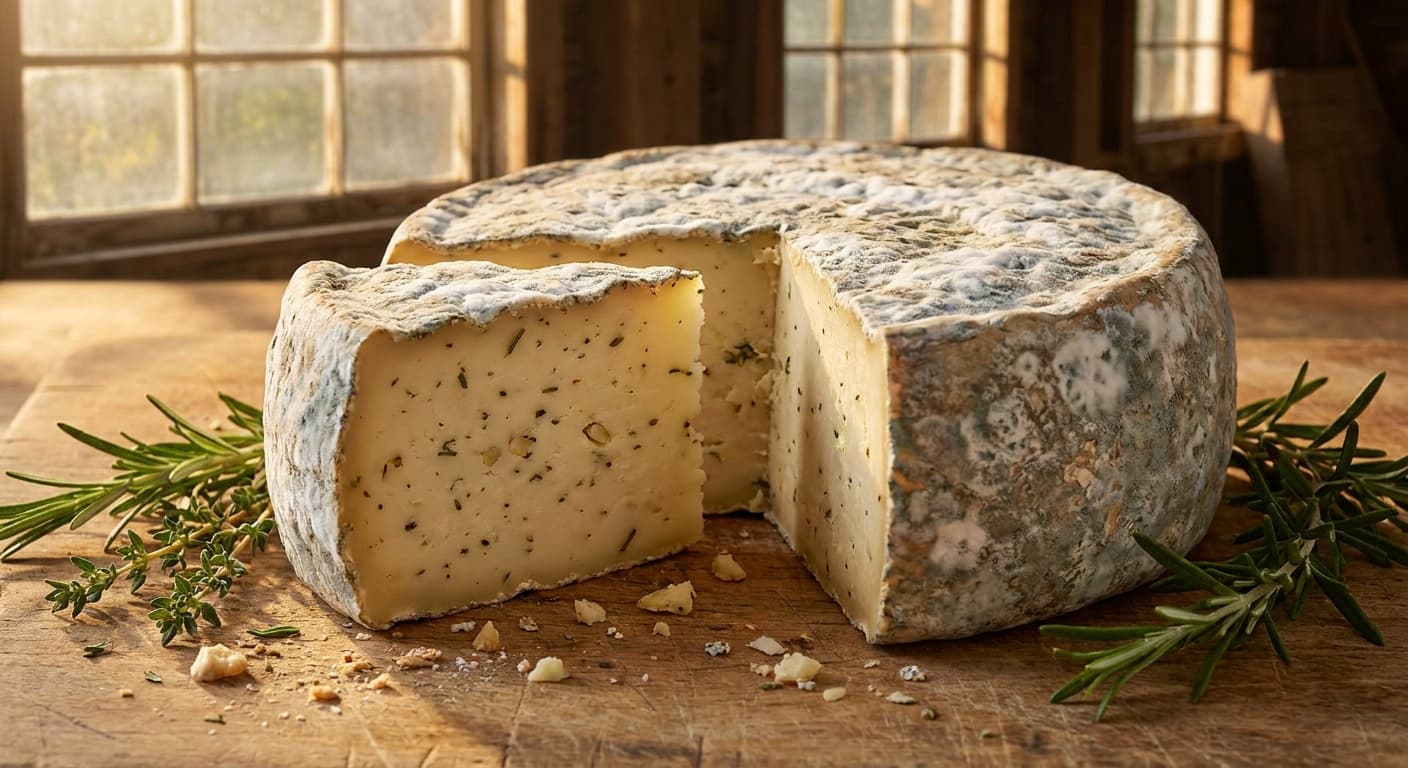
A semi-firm cow's cheese aged 16 weeks to develop a pale golden paste with herbs and garlic visible throughout. The texture becomes smooth and slightly crumbly, while the natural rind develops earthy, mushroom-like notes. Aromatic herbs blend with a gentle tang and the savory depth of garlic, creating a rustic, farmstead character.
Viability Assessment
This is a sensible, achievable cheese concept that marries thermophilic culture development with herb additions effectively. The 16-week aging supports proper texture and flavor integration, though success depends heavily on controlling garlic intensity and achieving consistent rind development in cellar conditions. The concept is technically sound but requires careful execution to balance the add-ins with cheese development.
Evaluation breakdown
Scored across five dimensions of cheese viability
The sensory profile aligns well with thermophilic culture development over 16 weeks, and herb-garlic integration is plausible with controlled cellar aging.
The process is realistic for artisanal makers, though managing fresh garlic during cheesemaking requires attention to timing and moisture control.
Thermophilic cultures work well for this style, though natural rind development depends on consistent cellar ecology and may vary without controlled inoculation.
The recipe produces the described cheese, though garlic intensity and herb distribution require precise timing during curd formation.
Herb-garlic cheeses have established market appeal, though this version needs careful balancing to avoid being either bland or overpowering.
Technical confidence
What's certain vs. what depends on specific maker control
Certain
Chemistry & physics facts — will happen given these inputs.
- •Thermophilic cultures will acidify milk and support curd formation at elevated temperatures.
- •Animal rennet will coagulate casein proteins effectively for firm curd development.
- •16-week aging will reduce moisture content and concentrate flavors through proteolysis.
- •Salt at 2.5% will migrate throughout the cheese and support preservation.
- •Controlled cellar humidity will prevent excessive moisture loss during aging.
Likely
Probable with reasonable technique and control.
- •Semi-firm texture with slight crumbliness will develop through extended aging.
- •Herbs will integrate into the paste while maintaining some visual distinction.
- •Natural rind will form with earthy, mushroom-like characteristics.
- •Garlic flavor will mellow and integrate rather than dominate.
- •Pale golden paste color will develop from milk fat concentration and aging.
Depends on action
Requires deliberate inoculation or specific conditions not in the config.
- •Consistent natural rind flora requires stable cellar microecology or deliberate surface inoculation with Geotrichum candidum.
- •Optimal herb distribution requires adding them during curd cutting when pieces are 1-2cm.
- •Balanced garlic intensity requires using fresh garlic minced to 2-3mm pieces, not larger.
- •Proper aging environment requires maintaining 80-85% humidity without surface mold overgrowth.
Recipe & how to make it
Expected Yield
420-480g finished wheel from 4L whole cow's milk, approximately 11-12% yield after aging losses
Mould Size
15cm diameter x 6cm height tomme mould
Salt Method · Precise
Saturated brine (23% w/v) for 8-10 hours, targeting 2.5% final cheese salt content by weight
Ingredients
- •4L whole cow's milk
- •1/8 tsp thermophilic starter culture (Streptococcus thermophilus)
- •3-4ml liquid animal rennet (single strength)
- •2 tbsp fresh herbs (thyme, rosemary, oregano), finely chopped
- •2 cloves fresh garlic, minced to 2-3mm pieces
- •Sea salt for brining (23% w/v saturated brine)
Equipment
- •Large heavy-bottomed pot
- •Long knife for cutting
- •Slotted spoon
- •Cheesecloth/muslin
- •15cm diameter tomme mould
- •Cheese press or weights
- •Aging cave or cheese fridge
Steps
- 1Heat milk to 42°C and add thermophilic culture, stir gently and hold temperature for 45 minutes until pH reaches 6.4-6.5.
- 2Add diluted rennet, stir for 30 seconds, then cover and maintain 42°C for 45-60 minutes until clean break achieved.
- 3Cut curd into 1cm cubes, rest 10 minutes, then gradually heat to 48°C over 20 minutes while gently stirring.
- 4Add herbs and garlic when curds reach rice-grain size and have expelled significant whey.
- 5Continue heating to 52°C and stir until curds reach desired firmness, approximately 30-45 minutes total cooking time.
- 6Drain whey to curd level, transfer curds to mould, and press at 20kg for 12 hours.
- 7Remove from press, place in saturated brine for 8-10 hours to achieve 2.5% salt content in finished cheese.
- 8Age at 12-14°C and 80-85% humidity, turning every 2-3 days for first month, then weekly.
- 9Age for 16 weeks total, monitoring for proper rind development and internal moisture.
Critical Checkpoints
- ▸pH at rennet addition: 6.4-6.5 (typically 45 minutes after culture addition)
- ▸Clean break test: curd should split cleanly without releasing whey when finger inserted
- ▸Curd cooking endpoint: pieces should be firm but not rubbery, releasing clear whey
- ▸Pressing pressure: 20kg for 12 hours to achieve proper consolidation
- ▸Aging humidity: maintain 80-85% to prevent cracking while allowing rind formation
The science behind your cheese
Chemistry
Thermophilic Streptococcus cultures convert lactose to lactic acid at elevated temperatures, lowering pH and supporting protein coagulation. The 16-week aging allows extensive proteolysis, breaking down casein into smaller peptides and amino acids that contribute to complex flavors. Salt migration creates moisture gradients that concentrate flavors and support preservation.
Physics
Higher cooking temperatures (48-52°C) promote syneresis, expelling whey and concentrating solids for the semi-firm texture. Controlled humidity during aging balances moisture loss with rind formation, while regular turning prevents uneven moisture distribution and promotes uniform aging.
Fermentation
Streptococcus thermophilus produces L-lactic acid primarily, creating the clean acidic base typical of Swiss-style cheeses. The culture remains active during early aging, contributing to ongoing pH reduction and flavor development through enzymatic activity on milk proteins and residual lactose.
Aging Process
Over 16 weeks, enzymatic proteolysis gradually softens the paste while developing nutty, complex flavors. The natural rind forms through surface dehydration and ambient mold colonization, creating a protective barrier that regulates continued moisture loss and supports flavor concentration in the interior paste.
The cheese playlist
5 songs to listen to while your cheese ages
The herb quartet of parsley, sage, rosemary and thyme mirrors this cheese's botanical soul
French pastoral romance that matches the rustic charm of herbs aging gracefully in cow's milk
Captures the golden paste development and the patient transformation of simple ingredients
The slow, earthy rhythm reflects the 16-week cellar aging process
The interplay of guitar voices mirrors how garlic and herbs weave through the cheese matrix
Sommelier's wine pairing
Recommended
Côtes du Rhône Rouge (Grenache-Syrah blend)
Southern Rhône Valley, France
Why it works
The wine's herbal garrigue notes (thyme, rosemary, lavender) create aromatic harmony with the cheese's herb additions, while the medium tannins complement the semi-firm texture without overwhelming the delicate garlic integration.
The Science
The wine's moderate tannins bind with the cheese's proteins, softening both elements, while the wine's natural acidity cuts through the concentrated milk fats. The shared terroir herbs create aromatic resonance rather than competition.
Serving suggestion
Best served at
Serve at 16-18°C to allow full aroma development and optimal texture expression
Accompaniments
Presentation
Cut into wedges showing herb and garlic distribution, arrange on wooden board with accompaniments in small bowls, garnish with fresh herb sprigs
Configuration
The exact parameters used to design this cheese in the Lab.
Members · Export
PDF export is for members
Sign in for free to download the full analysis as a PDF.
Quote · Professor Whiskers
“Ah yes, another cheese that thinks herbs make it sophisticated. Like putting a beret on a barn cat - charming, certainly, but we all know what's underneath. Still, sixteen weeks of patient aging shows more commitment than most humans manage, so perhaps there's wisdom in this pastoral pretense after all.”
— Professor Whiskers, Cheese Philosopher
Community feedback
Sign in to leave feedback or share how your cheese-making attempt went.
No feedback yet. Be the first to share your thoughts!