Sensory Concept
Emberglow Inferno
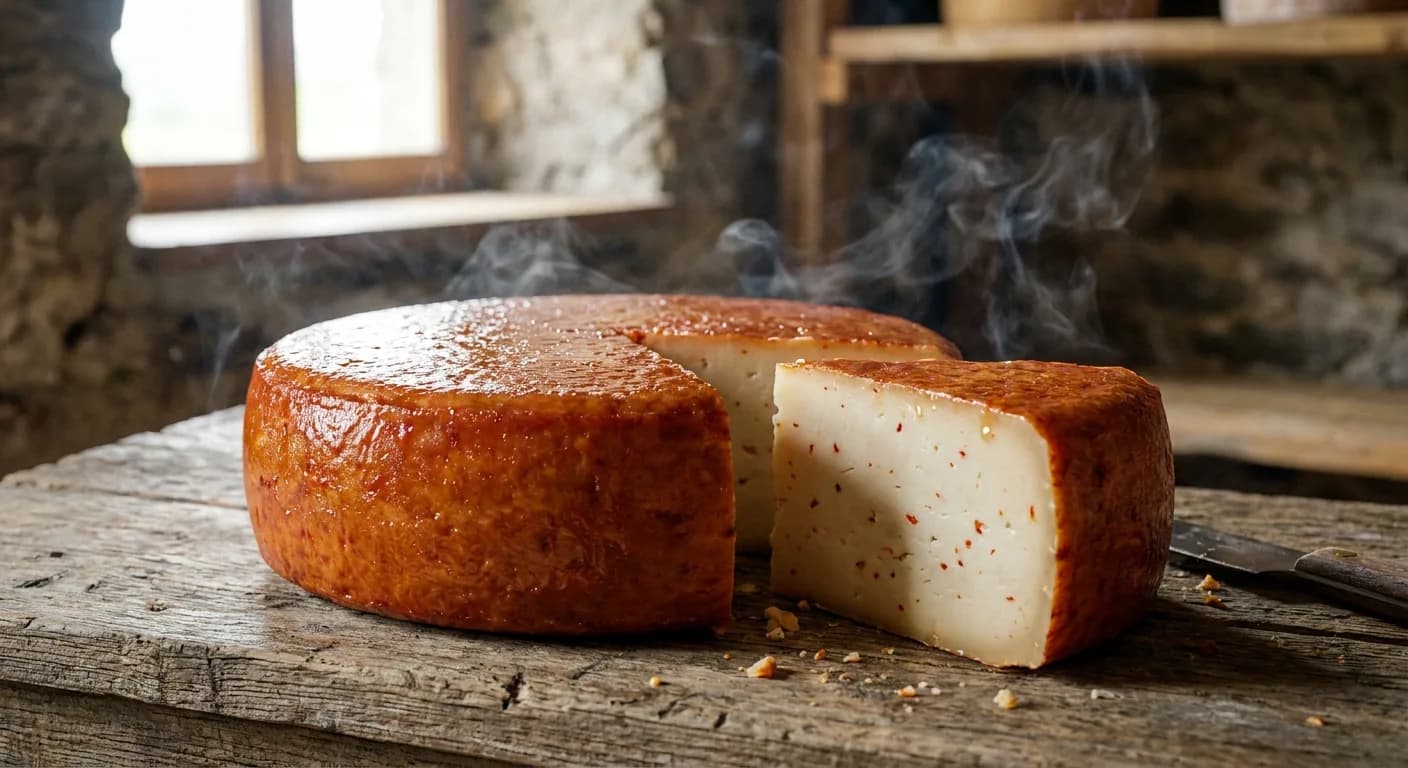
A burnished amber wheel with a moist, brick-red rind that glistens with brine. The interior paste is pale ivory and semi-firm, scattered with tiny crimson chilli flecks. Aromatic waves of smoke, barnyard funk, and capsicum heat meld with the pungent, meaty character of B. linens. Each bite delivers a building heat that plays against the tangy, proteolyzed richness of 21-week aging.
Viability Assessment
This concept faces significant technical tensions but is achievable with careful execution. The thermophilic starter conflicts with typical washed-rind practice, requiring temperature management during surface culture establishment. Skim milk limits fat-soluble smoke compounds and reduces textural richness. The 21-week aging period allows sufficient proteolysis to develop characteristic washed-rind flavours, though the lean paste may become quite firm.
Evaluation breakdown
Scored across five dimensions of cheese viability
The combination of smoke, chilli heat, and B. linens funk is plausible and distinctive. Skim milk will produce a firmer, less creamy texture than typical washed-rind cheeses.
Requires managing thermophilic acidification alongside mesophilic surface culture establishment. Hot smoking adds complexity but is achievable with proper ventilation and temperature control.
Thermophilic starter creates pH and temperature conditions that challenge typical B. linens establishment. Surface cultures prefer mesophilic conditions and higher pH than thermophilic makes typically achieve.
Recipe addresses the starter-surface culture tension through staged inoculation and careful pH management. Smoking and washing steps support the described rind character.
Unique combination of smoke, heat, and funk appeals to adventurous cheese enthusiasts. However, the intense flavour profile and lean texture limit broader market appeal.
Technical confidence
What's certain vs. what depends on specific maker control
Certain
Chemistry & physics facts — will happen given these inputs.
- •Thermophilic culture will acidify milk and form curds suitable for pressing.
- •Microbial rennet will coagulate casein proteins effectively at the target temperature.
- •Hot smoking will impart smoke compounds to the cheese surface and outer paste.
- •Twenty-one weeks of aging will drive significant proteolysis and moisture loss.
- •Chilli particles will remain visible and contribute capsaicin heat.
Likely
Probable with reasonable technique and control.
- •Semi-firm texture due to skim milk and extended aging, firmer than typical washed-rind cheeses.
- •B. linens will establish on the surface with careful pH and humidity management.
- •Brick-red to orange rind coloration from B. linens and associated yeasts.
- •Smoke flavour will mellow and integrate during aging but remain detectable.
- •Final moisture content around 38-42% creating a sliceable but not crumbly texture.
Depends on action
Requires deliberate inoculation or specific conditions not in the config.
- •Consistent B. linens rind requires surface inoculation with B. linens culture, not included in thermophilic starter.
- •Proper smoke penetration requires controlled hot smoking at 80-90°C for 2-4 hours.
- •Characteristic washed-rind aroma requires regular brine washing with 2-3% salt solution throughout aging.
- •Balanced heat level depends on chilli variety and particle size distribution during make.
Recipe & how to make it
Expected Yield
420-480g finished wheel from 4L skim milk, approximately 11-12% yield after 21-week aging
Mould Size
15cm diameter x 6cm height tomme mould
Salt Method · Precise
Dry salt rub at 2.2% of green cheese weight after pressing, plus weekly brine washing with 2.5% w/v salt solution throughout aging
Ingredients
- •4L skim cow's milk
- •1/4 tsp TM81 thermophilic culture (Streptococcus thermophilus)
- •1/8 tsp Brevibacterium linens surface culture
- •1 tsp liquid microbial rennet (single strength)
- •2-3g dried chilli flakes (medium heat)
- •Non-iodized salt for brine and dry salting
- •Calcium chloride if using store-bought milk
Equipment
- •Large heavy-bottomed pot
- •Long knife for cutting curds
- •Fine mesh strainer
- •Cheese press or improvised pressing setup
- •15cm diameter tomme mould
- •Hot smoker or improvised smoking setup
- •Aging space at 12-14°C, 85-90% humidity
- •pH strips or digital pH meter
Steps
- 1Heat milk to 32°C, add calcium chloride if needed
- 2Add thermophilic culture, stir gently, hold 30 minutes
- 3Add chilli flakes when milk reaches pH 6.4-6.5
- 4Add rennet, stir 30 seconds, cover and hold at 32°C for 45-75 minutes until clean break
- 5Cut curds to 8mm, rest 10 minutes
- 6Gradually heat to 42°C over 30 minutes, stirring gently
- 7Hold at 42°C for 45-60 minutes until curds compact and pH reaches 6.2-6.3
- 8Drain whey, transfer curds to lined mould
- 9Press at 5kg for 12 hours, flip and press at 10kg for 24 hours
- 10Remove from press, dry salt at 2.2% of green cheese weight
- 11Hot smoke at 85°C for 3 hours with fruit wood
- 12Move to aging space at 12-14°C, 85-90% humidity
- 13After 48 hours, spray surface with B. linens solution (1g culture in 100ml sterile water)
- 14Wash with 2.5% salt brine twice weekly for first month
- 15Continue weekly brine washing, age for 21 weeks total
- 16Turn daily for first month, then twice weekly
Critical Checkpoints
- ▸pH at rennet addition: 6.4-6.5
- ▸Curd cutting: clean break test must pass completely
- ▸pH at pressing: 6.2-6.3
- ▸Green cheese weight for salt calculation before smoking
- ▸Surface pH before B. linens inoculation: should rise to 5.8-6.2 within 48 hours
The science behind your cheese
Chemistry
Thermophilic Streptococcus thermophilus produces L-lactic acid, driving pH down to support syneresis and preserve texture. During aging, B. linens proteases break down casein proteins near the surface, creating the characteristic ammonia-forward aroma compounds and softer rind texture. Capsaicin from chilli remains stable throughout the aging process.
Physics
Hot smoking at 85°C drives moisture from the surface while depositing phenolic and carbonyl compounds. The lean milk creates less fat to trap smoke volatiles, requiring longer exposure for flavour development. Brine washing creates a moist surface environment that supports B. linens growth while controlling undesirable moulds.
Fermentation
The thermophilic starter acidifies rapidly at higher temperatures than typical washed-rind makes. B. linens requires surface pH neutralization through proteolysis and washing to establish properly. This creates a gradient from acidic interior (pH 5.2-5.4) to neutral-alkaline surface (pH 6.5-7.2).
Biology · Lactation & Milk
Skim cow's milk retains the casein matrix and water-soluble vitamins while removing most fat globules through mechanical separation. This creates a protein-forward base with reduced caloric density but maintains the calcium phosphate complex essential for proper curd formation. The lean composition means fewer fat-soluble vitamins and aromatic compounds.
Biology · Microbial
Streptococcus thermophilus is a homofermentative LAB that rapidly converts lactose to L-lactic acid at elevated temperatures. Its proteolytic activity is moderate compared to mesophilic cultures. B. linens is an aerobic actinobacterium that deaminates amino acids released by proteolysis, creating characteristic ammonia and sulfur compounds while raising surface pH.
Biology · Biotechnology
Microbial rennet from Rhizomucor miehei provides consistent coagulation strength without animal welfare concerns. Its proteolytic profile during aging is milder than animal rennet, creating less bitter peptide formation. The thermophilic culture is a defined commercial strain selected for reliable acidification, while B. linens culture provides consistent surface flora development independent of environmental conditions.
Aging Process
Twenty-one weeks allows extensive proteolysis from both residual chymosin and B. linens enzymes. Moisture migrates outward while salt migrates inward, concentrating flavours. The skim milk base loses moisture more readily than full-fat cheese, creating a firm but not hard final texture around 38-42% moisture.
The cheese playlist
5 songs to listen to while your cheese ages
The building heat and smoky character that defines this cheese's personality
Hot smoking process that gives the cheese its distinctive backbone
The slow burn of chilli heat meeting funky B. linens intensity
Celebrates the fiery progression from mild smoke to building capsaicin heat
The unusual combination of thermophilic starter with washed-rind surface culture - unconventional but compelling
Sommelier's wine pairing
Recommended
Gewürztraminer Vendanges Tardives
Alsace, France
Why it works
The wine's residual sugar and honeyed richness tames the chilli heat while its intense aromatics complement the B. linens funk. The wine's natural acidity cuts through the proteolyzed richness while its spicy lychee notes echo the capsaicin complexity.
The Science
Residual sugars bind capsaicin receptors reducing heat perception, while the wine's glycerol content soothes the palate. The wine's terpene compounds (linalool, geraniol) create aromatic harmony with the cheese's phenolic smoke compounds and B. linens metabolites.
Serving suggestion
Best served at
18-20°C to fully express the B. linens aromatics and allow the smoke and chilli flavours to bloom without overwhelming heat
Accompaniments
Presentation
Serve at room temperature on a wooden board with wedges cut to show the chilli-speckled interior. Arrange accompaniments to create cooling and heating elements around the cheese.
Configuration
The exact parameters used to design this cheese in the Lab.
Members · Export
PDF export is for members
Sign in for free to download the full analysis as a PDF.
Quote · Professor Whiskers
“Ah, Emberglow Inferno - a cheese that mirrors the human condition perfectly. We start with the gentle warmth of smoke, like hope, then encounter the building fire of chilli, much like responsibility, all while B. linens does its funky dance of transformation in the background. It's lean, intense, and demands respect - rather like a cat who's been left alone with the tuna can too long. *yawns philosophically*”
— Professor Whiskers, Cheese Philosopher
Community feedback
Sign in to leave feedback or share how your cheese-making attempt went.
No feedback yet. Be the first to share your thoughts!