Sensory Concept
Cumin Gold
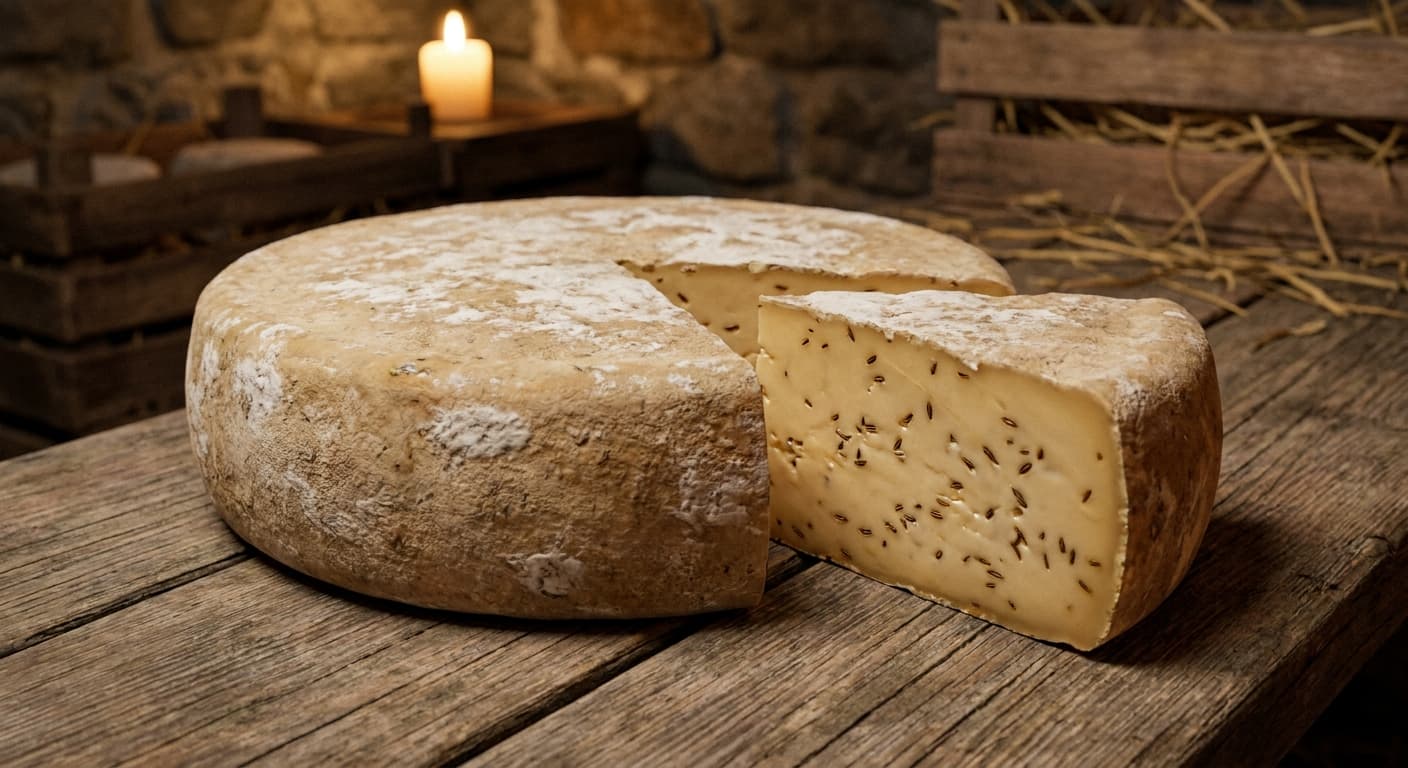
A semi-soft buffalo milk cheese with a pale golden paste dotted with aromatic cumin seeds. The texture is supple and slightly elastic, yielding a rich, tangy flavour balanced by warm, earthy spice notes. The natural rind develops a dusty bloom under cellar conditions, while the interior maintains buffalo milk's characteristic richness and subtle gamey undertones.
Viability Assessment
This concept is technically coherent but faces several execution challenges. Buffalo milk's higher protein content works well with thermophilic cultures for semi-soft texture development. However, achieving consistent rind character depends heavily on cellar ecology since no surface inoculation is specified. The cumin integration may create moisture pockets that complicate aging, and buffalo milk's seasonal availability limits commercial scalability.
Evaluation breakdown
Scored across five dimensions of cheese viability
Buffalo milk's richness and thermophilic culture development over 12 weeks supports the described texture and flavour profile, with cumin providing logical aromatic complexity.
The process is achievable for experienced artisanal makers, though buffalo milk handling requires adjustment from cow's milk techniques and consistent sourcing may be challenging.
Thermophilic cultures will acidify and develop texture appropriately, but natural rind development relies entirely on ambient cellar microflora which may produce inconsistent results.
The recipe accurately reflects the inputs and produces the described cheese style, with appropriate adjustments for buffalo milk's unique properties.
Buffalo milk with cumin offers distinctive positioning, though seasonal milk availability and higher production costs limit broad market appeal.
Technical confidence
What's certain vs. what depends on specific maker control
Certain
Chemistry & physics facts — will happen given these inputs.
- •Buffalo milk's higher protein and fat content will produce a richer, more elastic texture than cow's milk.
- •Thermophilic cultures will acidify the milk and develop characteristic nutty, cooked milk flavours during the 12-week aging period.
- •Cumin seeds will release aromatic compounds into the paste during pressing and aging.
- •Moisture content will decrease from approximately 60% to 45-50% over 12 weeks under proper cellar conditions.
- •Natural enzymatic breakdown will create a semi-soft texture with some flexibility in the paste.
Likely
Probable with reasonable technique and control.
- •The cheese will develop a pale golden interior colour typical of buffalo milk cheeses.
- •Cumin will provide warm, earthy spice notes that complement buffalo milk's slight gamey character.
- •Texture will be supple and sliceable but not crumbly, with slight elasticity when pressed.
- •Natural rind will form a thin, dusty surface with possible light mould development.
- •Yield will range from 420-480g finished cheese from 4L buffalo milk due to higher solids content.
Depends on action
Requires deliberate inoculation or specific conditions not in the config.
- •Consistent white bloomy rind requires deliberate inoculation with P. candidum at 0.01g per 4L milk, not included in current recipe.
- •Even cumin distribution requires careful incorporation during curd formation to avoid moisture pockets.
- •Stable rind character depends on consistent cellar microflora or controlled surface washing every 3-4 days.
- •Optimal texture development requires monitoring pH progression and may need pressing weight adjustments for buffalo milk's different protein structure.
Recipe & how to make it
Expected Yield
Approximate 380-450g finished wheel from 4L buffalo milk, depending on final moisture content after 12 weeks
Mould Size
15cm diameter x 8cm height semi-soft cheese mould with drainage holes
Salt Method · Precise
Apply 3% salt by weight of green cheese (cheese weight immediately after pressing, before aging) as dry salt rub on all surfaces before initial aging. For typical 450g green cheese, use approximately 13-14g salt.
Ingredients
- •4L whole buffalo milk
- •1/4 tsp Streptococcus thermophilus starter culture (e.g., MA 4001)
- •1ml liquid animal rennet (single strength) or manufacturer's recommendation for 45-60 minute set
- •2 tsp whole cumin seeds, lightly crushed
- •Salt for finishing (amount determined by method below)
Equipment
- •Large heavy-bottomed pot
- •Long knife for cutting curds
- •Fine mesh strainer
- •Cheesecloth or muslin
- •15cm diameter x 8cm height cheese mould
- •Cheese press or heavy weights
- •Aging space with 80-85% humidity at 12-15°C
Steps
- 1Heat buffalo milk to 32°C and maintain temperature throughout process.
- 2Add thermophilic starter culture, stir gently, and ripen for 45-60 minutes until pH reaches 6.4-6.5.
- 3Add rennet diluted in 2 tbsp cool water, stir for 30 seconds, then leave undisturbed for 45-75 minutes until clean break achieved.
- 4Cut curds into 1cm cubes and let rest 10 minutes to release whey.
- 5Gradually heat curds to 42°C over 30 minutes, stirring gently to expel moisture.
- 6Test curd readiness: curds should spring back when squeezed and release clear whey.
- 7Drain whey until curds are at 70% original volume, then gently fold in crushed cumin seeds.
- 8Transfer curds to lined mould, ensuring even cumin distribution.
- 9Press at 2kg weight for 4 hours, then flip and press at 4kg for 12 hours.
- 10Remove from mould when pH reaches 5.2-5.4 and cheese holds its shape firmly.
- 11Age at 12-15°C and 80-85% humidity for 12 weeks, turning every 2-3 days for first month, then weekly.
Critical Checkpoints
- ▸pH at rennet addition: 6.4-6.5 (milk should taste noticeably tangy)
- ▸Clean break test: curd should split cleanly when knife inserted and lifted
- ▸Curd texture before draining: pieces should feel firm but springy, not mushy
- ▸pH at pressing: 5.2-5.4 (curds should squeak slightly when chewed)
- ▸Green cheese firmness: should hold shape without support before aging begins
The science behind your cheese
Chemistry
Buffalo milk's higher casein content (4.5% vs 3.3% in cow's milk) creates stronger protein networks during coagulation, while thermophilic cultures produce lactic acid and develop characteristic nutty flavour compounds through proteolysis. The cumin's essential oils, primarily cuminaldehyde, migrate through the paste during aging.
Physics
Syneresis occurs more gradually in buffalo milk due to higher protein density, requiring careful temperature control to achieve proper moisture expulsion. The semi-soft texture develops as calcium-protein bonds reorganize during the 12-week aging period, while surface moisture migration creates conditions for natural rind formation.
Fermentation
Streptococcus thermophilus converts lactose to lactic acid while producing acetaldehyde and diacetyl compounds that contribute to the cooked milk character. The culture's optimal growth at higher temperatures suits buffalo milk's processing requirements and develops the desired semi-firm texture through controlled acidification.
Aging Process
Over 12 weeks, proteolytic enzymes from the starter culture and residual chymosin break down casein networks, creating the supple texture. Moisture migrates outward while salt penetrates inward, concentrating flavours. Surface yeasts and moulds from ambient cellar air may colonize the rind, though consistency depends on environmental microflora.
The cheese playlist
5 songs to listen to while your cheese ages
Exotic spice route vibes match the cumin's warm earthiness and buffalo milk's rich complexity
The golden paste colour and luxurious buffalo milk richness deserve this smooth, honeyed celebration
Cumin literally spices up the life of this cheese, and the playful energy matches artisanal experimentation
Eastern mystique and complex layering reflect both the spice integration and buffalo milk's exotic character in Western cheesemaking
The slight gamey undertone of buffalo milk gets a fierce, confident soundtrack for this bold flavour combination
Sommelier's wine pairing
Recommended
Gewürztraminer Reserve
Alsace, France
Why it works
The wine's characteristic spice notes and aromatic intensity complement cumin's earthiness while its slight sweetness balances buffalo milk's gamey undertones. The wine's full body matches the cheese's rich, elastic texture without overwhelming the delicate spice integration.
The Science
Gewürztraminer's terpene compounds (linalool and geraniol) create aromatic harmony with cumin's aldehyde compounds, while the wine's moderate acidity cuts through buffalo milk's higher fat content. The slight residual sugar provides a bridge between the cheese's salt content and the warm spice finish.
Serving suggestion
Best served at
18-20°C serving temperature allows the buffalo milk richness to fully express while ensuring the cumin's aromatic oils are at peak volatility
Accompaniments
Presentation
Serve at room temperature on a wooden board, cut into generous wedges to show the golden paste dotted with cumin. Arrange accompaniments in small bowls around the cheese, with the honeycomb positioned to catch ambient light.
Configuration
The exact parameters used to design this cheese in the Lab.
Members · Export
PDF export is for members
Sign in for free to download the full analysis as a PDF.
Quote · Professor Whiskers
“Ah yes, cumin in buffalo cheese—because apparently regular milk wasn't exotic enough for the humans. Though I admit, watching them age this golden creation for three months while I get the same kibble daily does reveal certain species-specific approaches to delayed gratification. *stretches paw dismissively*”
— Professor Whiskers, Cheese Philosopher
Community feedback
Sign in to leave feedback or share how your cheese-making attempt went.
No feedback yet. Be the first to share your thoughts!