Sensory Concept
Cinder & Smoke
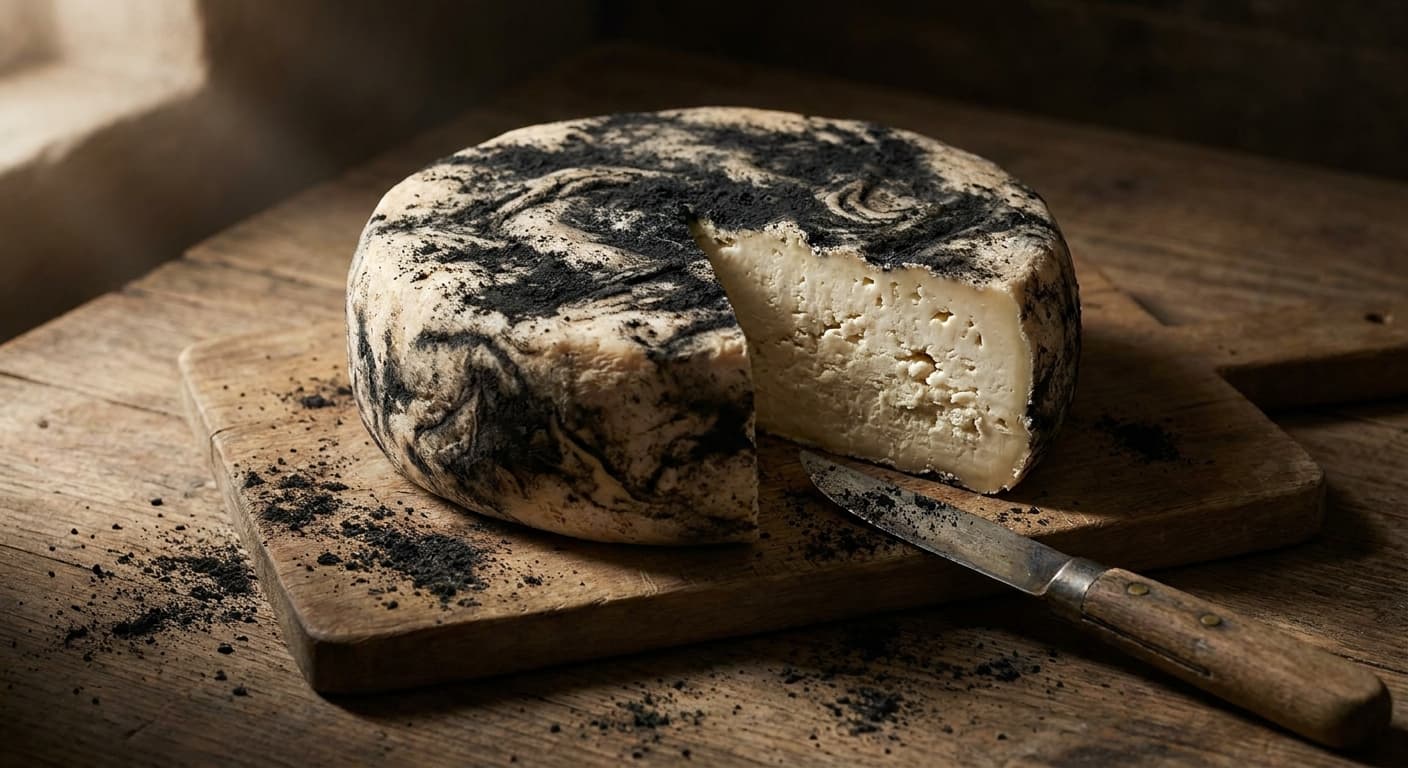
A striking wheel with ash-dusted charcoal rind and cold-smoke aromatics, revealing a dense, ivory paste with subtle mineral notes. The buffalo milk's richness balances the earthy ash and gentle smoke, creating a cheese that tastes like ancient fire meeting alpine stone. Firm yet yielding texture with complex savory depth that builds over 16 weeks of careful aging.
Viability Assessment
This is a technically coherent and distinctive cheese concept. The thermophilic culture suits buffalo milk well for developing the necessary structure over 16 weeks, while ash and cold smoking create genuine visual and aromatic appeal. The main challenge lies in balancing smoke intensity with the cheese's natural development, and ensuring the ash integrates properly without compromising rind formation.
Evaluation breakdown
Scored across five dimensions of cheese viability
Buffalo milk's richness, thermophilic culture development, and 16-week aging logically produce the described dense, complex paste. Ash and smoke elements are realistic additions that complement rather than overwhelm.
Straightforward hard cheese process with cold smoking and ash application well within artisanal capabilities. No exotic equipment or techniques required.
Thermophilic cultures thrive in buffalo milk and create appropriate acidification for this style. Controlled cellar environment supports clean aging without requiring complex secondary cultures.
Recipe directly supports the sensory description through appropriate culture selection, aging duration, and add-in integration. Natural rind development aligns with controlled environment.
Distinctive visual presentation and buffalo milk base create genuine market differentiation. Appeals to both artisanal cheese enthusiasts and those seeking unique presentation.
Technical confidence
What's certain vs. what depends on specific maker control
Certain
Chemistry & physics facts — will happen given these inputs.
- •Thermophilic cultures will acidify the buffalo milk and create firm curd structure suitable for extended aging.
- •Animal rennet will coagulate buffalo milk proteins effectively, producing clean curd formation.
- •16-week aging will reduce moisture content and concentrate flavors through proteolysis and controlled dehydration.
- •Cold smoking will deposit surface aromatics without cooking the cheese or disrupting internal structure.
- •Ash will create visual contrast and provide subtle mineral notes without interfering with basic cheese chemistry.
Likely
Probable with reasonable technique and control.
- •Dense, semi-hard texture with some flexibility develops from buffalo milk's protein structure under thermophilic fermentation.
- •Natural rind forms in controlled cellar conditions, potentially incorporating some ash for textural interest.
- •Smoke flavor integrates moderately into the paste during aging, balancing with buffalo milk's inherent richness.
- •Final moisture content settles around 40-45% after 16 weeks in controlled humidity environment.
- •Mild nutty and savory flavor development occurs alongside smoke and mineral notes.
Depends on action
Requires deliberate inoculation or specific conditions not in the config.
- •Even ash distribution requires careful application timing and technique during make or early aging.
- •Smoke intensity balance depends on cold smoking duration and wood selection - requires testing to avoid overpowering.
- •Consistent rind character depends on maintaining stable cellar conditions and regular turning schedule.
- •Optimal texture development requires monitoring and adjusting aging environment humidity based on rind condition.
Recipe & how to make it
Expected Yield
Approximately 420-480g finished wheel from 4L buffalo milk, assuming 11-12% yield after 16 weeks aging
Mould Size
15cm diameter x 7cm height pressed cheese mould
Salt Method · Precise
2.5% of green cheese weight after pressing, applied as dry salt rub before initial drying and ash application
Ingredients
- •4L whole buffalo milk
- •1/4 tsp Danisco TA 060 thermophilic culture
- •4-5ml liquid animal rennet (single strength)
- •Food-grade activated charcoal ash, 2-3 tbsp
- •Non-iodized salt for 2.5% of green cheese weight
Equipment
- •Large heavy-bottomed pot
- •Long knife for cutting curds
- •Large spoon or ladle
- •Fine mesh strainer
- •15cm diameter pressed cheese mould
- •Cheese press or weights up to 20kg
- •Cold smoking setup
- •Aging space at 12-14°C
Steps
- 1Heat milk to 32°C, add culture, ripen for 45-60 minutes until pH reaches 6.4-6.5
- 2Add rennet, mix gently, allow to set for 45-60 minutes until clean break achieved
- 3Cut curds to 6mm dice, rest 10 minutes
- 4Gradually heat to 42°C over 30 minutes while gently stirring
- 5Continue cooking and stirring until curds shrink to firm pellets, approximately 45-60 minutes total
- 6Test curds - should spring back when squeezed and release clear whey
- 7Drain whey, transfer curds to mould, press at 5kg for 2 hours
- 8Remove, flip, re-dress, press at 10kg for 6 hours
- 9Remove, flip, re-dress, press at 15kg for 12 hours
- 10Remove from press, weigh green cheese, apply salt at 2.5% of this weight as dry rub
- 11Air dry for 24 hours until surface is tacky
- 12Dust evenly with activated charcoal ash, pressing gently to adhere
- 13Cold smoke for 2-3 hours using fruit wood at under 25°C
- 14Age in cellar at 12-14°C, 80-85% humidity, turning every 2-3 days for first month, then weekly
Critical Checkpoints
- ▸pH at rennet addition: 6.4-6.5, ensuring proper acidification
- ▸Clean break test: curd should split cleanly when knife is inserted and lifted
- ▸Curd cooking endpoint: pellets should feel firm and release clear whey when squeezed
- ▸Pre-salting weight: record green cheese weight accurately for salt calculation
- ▸Ash adhesion: surface should be slightly tacky before ash application for proper adherence
The science behind your cheese
Chemistry
Thermophilic lactobacilli convert lactose to lactic acid, dropping pH and enabling proper casein coagulation with animal rennet. Buffalo milk's higher protein and fat content creates a denser matrix than cow's milk. The ash provides calcium carbonate that can buffer surface acidity slightly.
Physics
Extended pressing and thermophilic cooking drive syneresis, expelling whey and concentrating the protein matrix. Cold smoking deposits volatile aromatic compounds on the surface without heat damage. Controlled humidity aging promotes gradual moisture loss while preventing surface cracking.
Fermentation
Thermophilic cultures thrive at the cooking temperature, continuing acidification during pressing and early aging. The controlled cellar environment limits wild fermentation to beneficial surface yeasts and molds that develop the natural rind character.
Aging Process
Over 16 weeks, proteolytic enzymes from the rennet and residual bacterial activity break down casein chains, developing texture and flavor complexity. Moisture migrates outward, concentrating flavors while the rind forms a protective barrier that regulates further moisture loss.
The cheese playlist
5 songs to listen to while your cheese ages
The ash-dusted darkness and emotional depth mirror this cheese's striking appearance and complex character
Classic song about smoke and fire perfectly captures the cold-smoking process and elemental nature
The controlled burn of cold smoking and the ring-shaped wheel create a perfect metaphorical match
Celebrates the buffalo milk foundation with reggae rhythms that match the patient aging process
The ash dusting and time's passage during 16 weeks of aging reflect the song's themes of transformation
Sommelier's wine pairing
Recommended
Nero d'Avola
Sicily, Italy
Why it works
The wine's robust tannins and dark fruit complement the buffalo milk's richness while echoing the cheese's ash-dusted appearance. Sicily's volcanic soils add mineral notes that harmonize with the ash, while the wine's moderate acidity cuts through the dense texture.
The Science
Tannins bind with the cheese's proteins, softening both elements. The wine's natural acidity stimulates salivation, cleansing the palate between bites of this rich, dense cheese. Aromatic compounds in both the wine and cold-smoked cheese create complementary rather than competing flavor layers.
Serving suggestion
Best served at
18-20°C to allow the buffalo milk's richness and smoke aromatics to fully develop on the palate
Accompaniments
Presentation
Serve at room temperature on slate or dark wood to showcase the dramatic ash-dusted rind. Cut into wedges revealing the contrast between dark exterior and pale interior.
Configuration
The exact parameters used to design this cheese in the Lab.
Members · Export
PDF export is for members
Sign in for free to download the full analysis as a PDF.
Quote · Professor Whiskers
“Ah, Cinder & Smoke - like my soul after contemplating the meaninglessness of existence, dusted with the ashes of my hopes yet somehow still smoldering with possibility. Sixteen weeks of patient suffering, much like my daily contemplation of the empty food bowl, transforms base milk into something profound. The buffalo knew what it was about.”
— Professor Whiskers, Cheese Philosopher
Community feedback
Sign in to leave feedback or share how your cheese-making attempt went.
No feedback yet. Be the first to share your thoughts!