
Author
Monsieur Fromage
Every cheesemaking forum has the same new-member post once a week: what kit do I need to start? It is always followed by a torrent of replies listing, essentially, the contents of a small dairy.
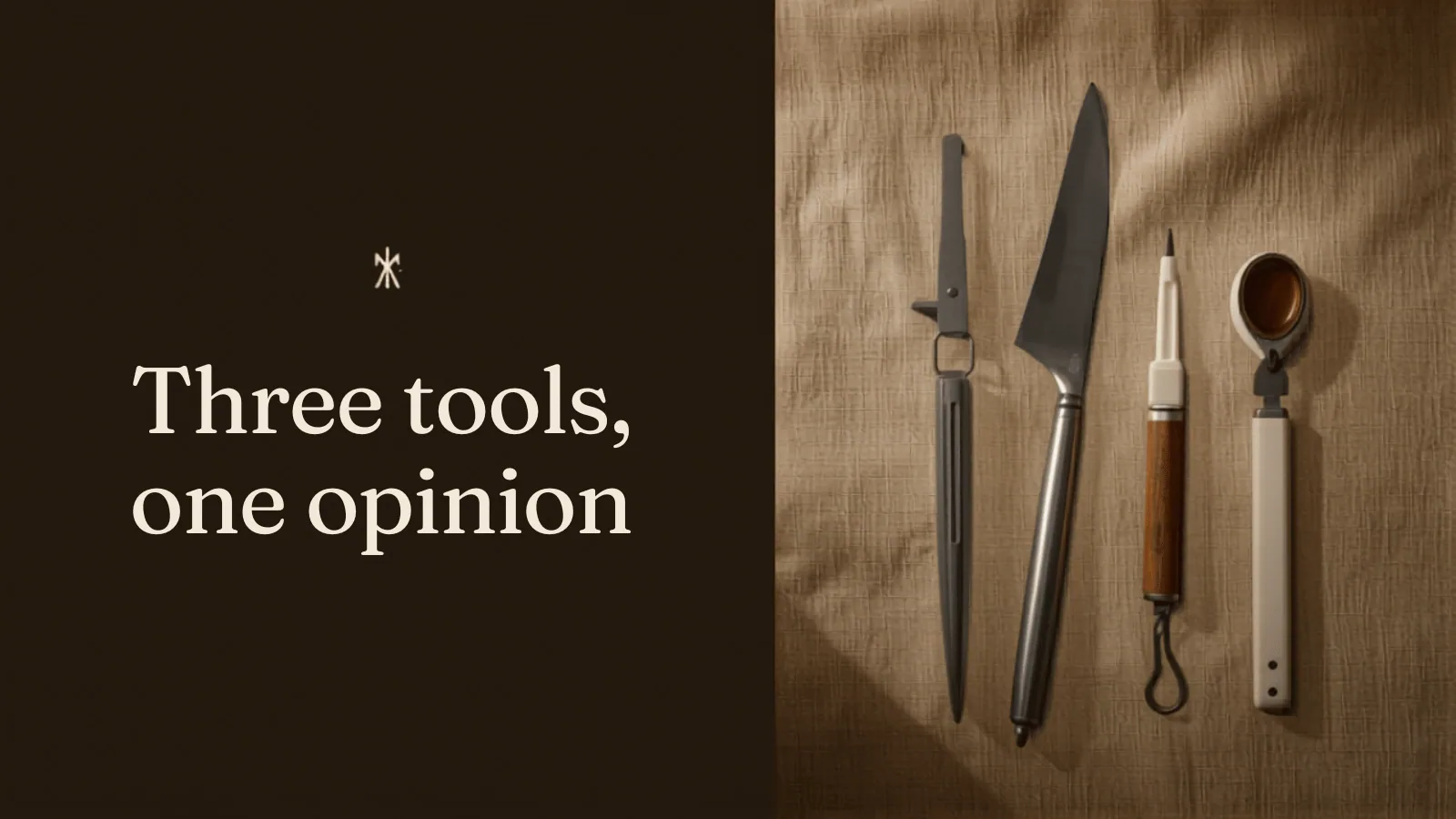
You do not need the contents of a small dairy. You need three things. If you have exactly these three things, you can make most cheeses in most styles, and they will be good.
1. A digital pH meter with a spear probe
The most important tool in cheesemaking. I have written a love letter to it, which you can read if you want persuading. A £60–£120 meter is plenty. Skip the £15 pool-testing pens — they round to the nearest 0.2 pH and cheesemaking lives in tenths.
2. A long, flexible curd knife
By which I do not mean a £45 stainless steel specialty tool, although those are pleasing. I mean: a long, thin-bladed cake knife or a boning knife long enough to reach the bottom of your stockpot. It needs to be sharp and it needs to pass through curd cleanly. That's it.
If you are making wheels larger than about a kilo, a proper cheesemaking harp becomes worth it. Until then, the £9 boning knife from the local kitchen shop does everything the harp does, just with more arm movement.
3. A reliable heat source and a good thermometer
A thick-bottomed stainless stockpot, a hob that can hold temperature without cycling wildly, and a digital thermometer accurate to 0.5°C. A cheap probe thermometer from a homebrew shop is fine. A £200 commercial one is unnecessary.
What you do not need (yet)
- A dedicated cheese press. Improvise with weights on a draining mat. Upgrade later if you start pressing harder styles.
- A wine fridge. A cool cupboard, a ripening box with a hygrometer, and patience will get you through your first several months.
- Speciality cultures in fifteen varieties. Start with one mesophilic and one thermophilic direct-set pack. That's two cheeses in your freezer that will get you to 80% of home styles.
- A cheese cave. You will want one eventually. You do not need one to start.
The philosophy
Cheesemaking rewards discipline far more than it rewards equipment. I have tasted magnificent cheeses made by people with two thermometers and a stockpot. I have tasted woeful cheeses made by people with full dairy fit-outs. The gap is not in the kit.
If you want the deeper context on technique, the Cheesemaking Techniques pillar is a good next read. And if you're still shopping, the single best thing you can do is stop shopping and make your first cheese.